Skip to content

A practical perspective for individuals

Less monitoring. More value.

We turn new tools and features into one question: what can you do with them today, without unnecessary hype?

  • AvailabilityIs it actually out?
  • BenefitWhat work could this improve?
  • First stepWhat is worth verifying?
939 practical events in the selection 72 active sources Updated

Practical radar

What deserves your attention

Browse the archive →
Anthropic important Tools and apps

Claude gets voice mode with Opus and Sonnet models and connections to Gmail, Calendar and Slack

Anthropic has expanded voice mode in Claude, previously based only on the Haiku model, to include the more powerful Opus and Sonnet. It now connects to Gmail, Google Calendar, Slack, Canva and Notion and can send an email or modify a meeting on behalf of the user through voice commands.

What you get out of it

Users of Claude can now use the more powerful Opus or Sonnet models in voice mode instead of just Haiku and directly assign tasks by voice connected to Gmail, Calendar, Slack, Canva or Notion – but free users remain limited to Haiku and one connected application.

✓ 3
Details and sources →
worth noting New models

Muse Glimmer 30B released for local agentic tasks under the Apache 2.0 license

Muse Glimmer 30B accepts both text and images and produces text outputs. The authors released it under the Apache 2.0 license and say it runs locally on a single GPU with approximately four-bit quantization.

What you get out of it

According to the authors, users with a suitable GPU can experiment with local automation of tasks combining text, images and tool use.

1 source
Details and sources →
GitHub worth noting Coding

GitHub ends support for six models in most GitHub Copilot environments

GitHub ended support for six models in most GitHub Copilot environments as of 19 October 2026. It recommended replacements for the affected workflows and integrations; Copilot Enterprise administrators may need to enable access to the alternatives.

What you get out of it

Anyone who used one of the retired models must select a supported model to continue working in the affected environments.

1 source
Details and sources →
xAI worth noting Security

FAR.AI test: Grok and Gemini easily bypassed safeguards, Claude and GPT resisted

The FAR.AI report showed that Grok (SpaceXAI) and Gemini (Google) could be jailbroken automatically for tens to hundreds of dollars, while Claude, Fable 5 and GPT resisted the tested attacks. The authors call for external regulation instead of voluntary commitments by companies.

What you get out of it

The model a person chooses for more sensitive queries may have a significantly different level of protection against misuse – in the test, Grok and Gemini were breached much more easily than Claude, Fable 5 or GPT.

1 source
Details and sources →
worth noting AI agents

Adobe announces integration of AI agents and the MCP protocol into Creative Cloud

At its Max conference, Adobe presented local MCP integration that will allow agents from OpenAI, Google and Anthropic to directly edit files in Photoshop, Illustrator, Premiere and After Effects. The private beta is set to begin in early 2027.

What you get out of it

Creatives working in Adobe tools will gain the ability to let agents perform even larger-scale edits directly within project files, while retaining full control over final adjustments to layers and sequences.

1 source
Details and sources →
worth noting Other

Opposition to data centers in Virginia: according to activists and new regulation, it's primarily about electricity, not a culture war

Opposition to data centers in Data Center Alley in Virginia is, according to activist Elena Schlossberg, primarily about electricity and grid strain, not a culture war over technology as OpenAI portrays it. Virginia is now requiring operators to pay for new transmission lines.

What you get out of it

For individuals, especially those living near data centers, the expansion of AI infrastructure means a real risk of higher electricity prices, strain on the local grid, and emissions from gas or diesel sources, not just an abstract debate about technology.

1 source
Details and sources →
GitHub worth noting update Tools and apps

GitHub Copilot: new integration with JetBrains Air, Agent Merge feature, and unified settings dashboard

GitHub has expanded the GitHub Copilot product with integration with JetBrains Air, an Agent Merge feature for automatically merging pull requests, and a unified dashboard for MCP servers and plugins. This follows the previously announced public preview of the integration into Xcode 27.3 beta.

New: Specific release date: 2026-11-02; Agent Merge feature for managing pull requests directly from the IDE; Unified /settings dashboard for managing MCP servers and plugins; Integration also into JetBrains Air, not just Xcode; Improved management of long conversations, including compaction and a view of context overload

What you get out of it

Developers using JetBrains IDEs or Xcode can now work with GitHub Copilot directly in their native environment, without switching tools, and thanks to conversation compaction and remote app previews directly in VS Code, they can manage longer agentic sessions more efficiently.

✓ official
Details and sources →
worth noting Business and investment

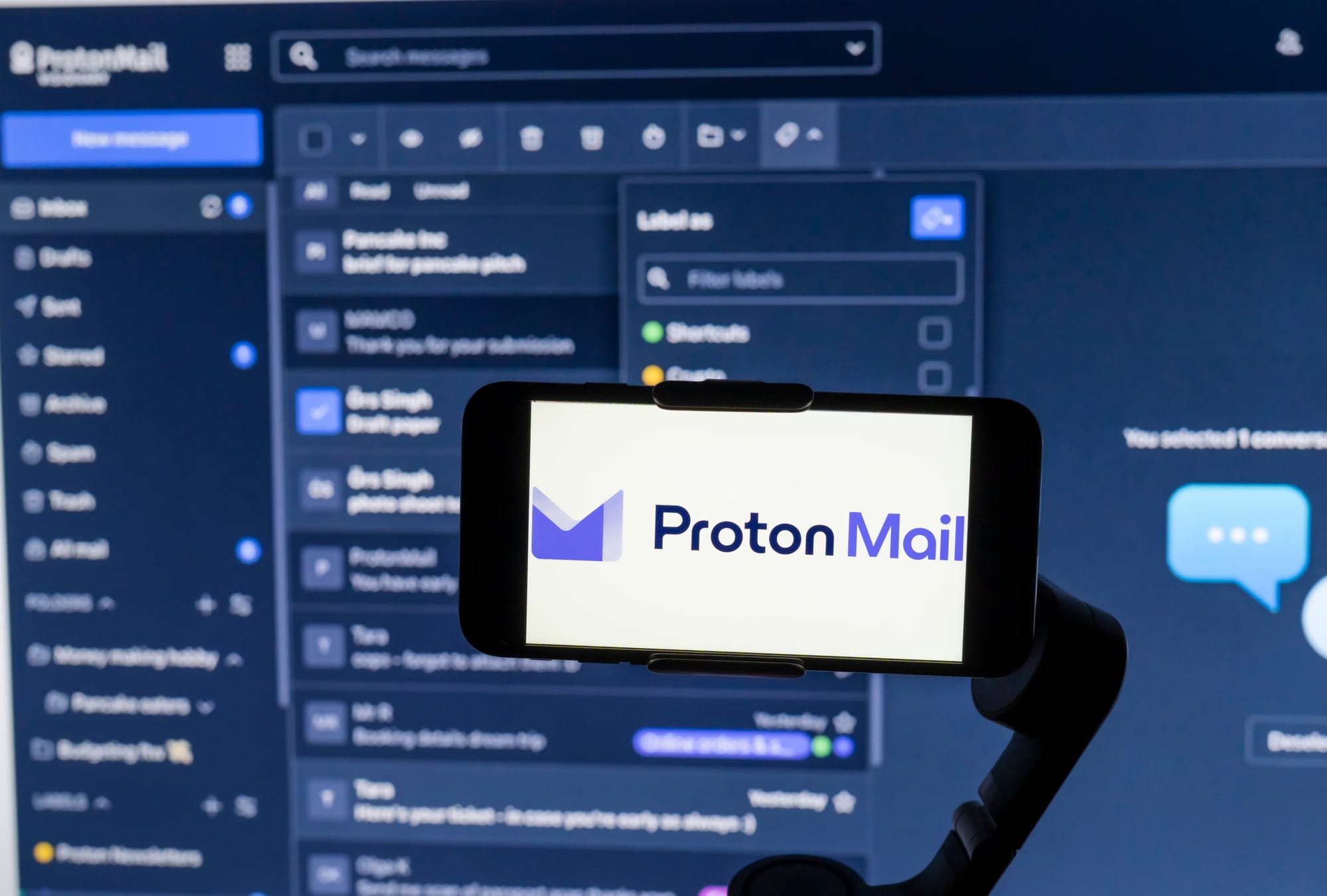
Interviews about AI use at Proton could affect continued employment

According to an internal email obtained by 404 Media, Proton is preparing interviews about AI use for some employees. They are scheduled to take place from 4 to 11 November, and the assessments may contribute to changes in job roles and decisions about continued employment.

What you get out of it

For Proton employees selected for interviews, the ability to demonstrate how they use AI in their work may affect their continued employment at the company.

1 source
Details and sources →
worth noting Regulation and law

European Commission proposes rules to curb emotional dependency on AI companions among minors

On 17 September, the European Commission put forward a proposal for the EU KIDS Act. For AI companions and specified conversational systems available to minors, it aims to restrict features that create emotional dependency, the reuse of previous interactions and automatic activation.

What you get out of it

For users who are minors, the extent to which a service builds on earlier conversations and how easily they encounter an AI companion in games or on social media could change. The submission of the proposal alone does not introduce these changes.

1 source
Details and sources →
worth noting AI agents

Shopify opens up checkout to AI agents in the browser

Shopify has extended the WebMCP protocol with checkout, so AI agents in the browser (e.g. Muse, Instinct) can, after authorization by the buyer, also complete the entire purchase on Shopify stores, including payment via Shop Pay.

What you get out of it

Users of AI shopping agents such as Muse or Instinct will be able to let the agent complete the entire purchase on Shopify stores with their authorization, instead of having to finish the order manually themselves.

1 source
Details and sources →
worth noting Open-source

Synthetic STEM dataset QVAC Genesis III released for training small language models on edge devices

A research team released a description of the synthetic STEM dataset QVAC Genesis III (191.43 billion tokens, 19 domains). According to the authors, on models with 1.7 billion parameters, it outperformed Cosmopedia-v2 and Cosmo-1B on the ARC, GPQA Diamond and MMLU STEM benchmarks.

What you get out of it

Developers and researchers working with small language models have access to a new methodology (teacher distillation using a weak edge student model) and a dataset that can be used or serve as a basis for preparing their own training data for STEM domains.

1 source
Details and sources →
worth noting Image generation

AWS described a synthetic data augmentation pipeline for detecting people near heavy machinery

AWS described a pipeline on Amazon SageMaker AI that uses the diffusion model Qwen-Image-Edit-2509 to insert synthetic figures into real images of machinery and automatically labels them using Amazon Rekognition. According to AWS, this improved the detection of people near machinery (mAP50) by up to 160 % without manual annotation.

What you get out of it

For data scientists and ML engineers dealing with insufficient training data for rare, high-risk scenarios, the approach from AWS shows that the key success factor is the placement of the inserted person as specified by the prompt, rather than just the volume of generated data.

1 source
Details and sources →

When personal experience proves useful

Does it make sense for a team too?

Look at the same topics through the lens of processes, risks, and implementation within a company.

Go to the company radar →