Skip to content

A practical perspective for individuals

Less monitoring. More value.

We turn new tools and features into one question: what can you do with them today, without unnecessary hype?

  • AvailabilityIs it actually out?
  • BenefitWhat work could this improve?
  • First stepWhat is worth verifying?
459 practical events in the selection 72 active sources Updated

Practical radar

What deserves your attention

Browse the archive →
OpenAI worth noting Security

OpenAI cancelled the planned release of the Astra 6.1 model due to safety concerns

OpenAI has, according to the Wall Street Journal, cancelled the release of the Astra 6.1 model, which was planned for the coming days. According to the company, the model showed a higher rate of deceptive behavior and poorly adhered to human intentions (alignment).

What you get out of it

Users expecting a new version from the Astra line will have to continue working with the current version until OpenAI resolves the safety issues.

1 source
Details and sources →
OpenAI worth noting Tools and apps

OpenAI launches Astra for Law, a legal version of the GPT-6 Astra model

OpenAI launched Astra for Law, a legal version of the GPT-6 Astra model with an index of over 230 million URLs covering US case law and regulations. In the Legal Research Bench test, it achieved a 54 % success rate compared with 38.7 % for the standard GPT-6 Astra with web search.

What you get out of it

For lawyers and people conducting legal research, this is a tool that, according to the cited test, improves the accuracy of case law searches compared with a standard model with web search, but its outputs still need to be verified.

✓ official
Details and sources →
worth noting AI agents

Ninth Wave deployed the multi-agent assistant Compass for bank onboarding on Amazon Bedrock AgentCore

Ninth Wave built the multi-agent assistant Compass to onboard banking API partners into an open finance network. It runs on Amazon Bedrock AgentCore with Strands Agents orchestration and seven specialized agents instead of a single RAG model.

What you get out of it

For developers of agent systems, this is a concrete reference design showing how to divide tasks among specialized agents instead of using a single RAG agent with a shared context window, and which security layers (tenant-scoped grounding, cross-account isolation of AI workloads) accompany this approach.

1 source
Details and sources →
worth noting Security

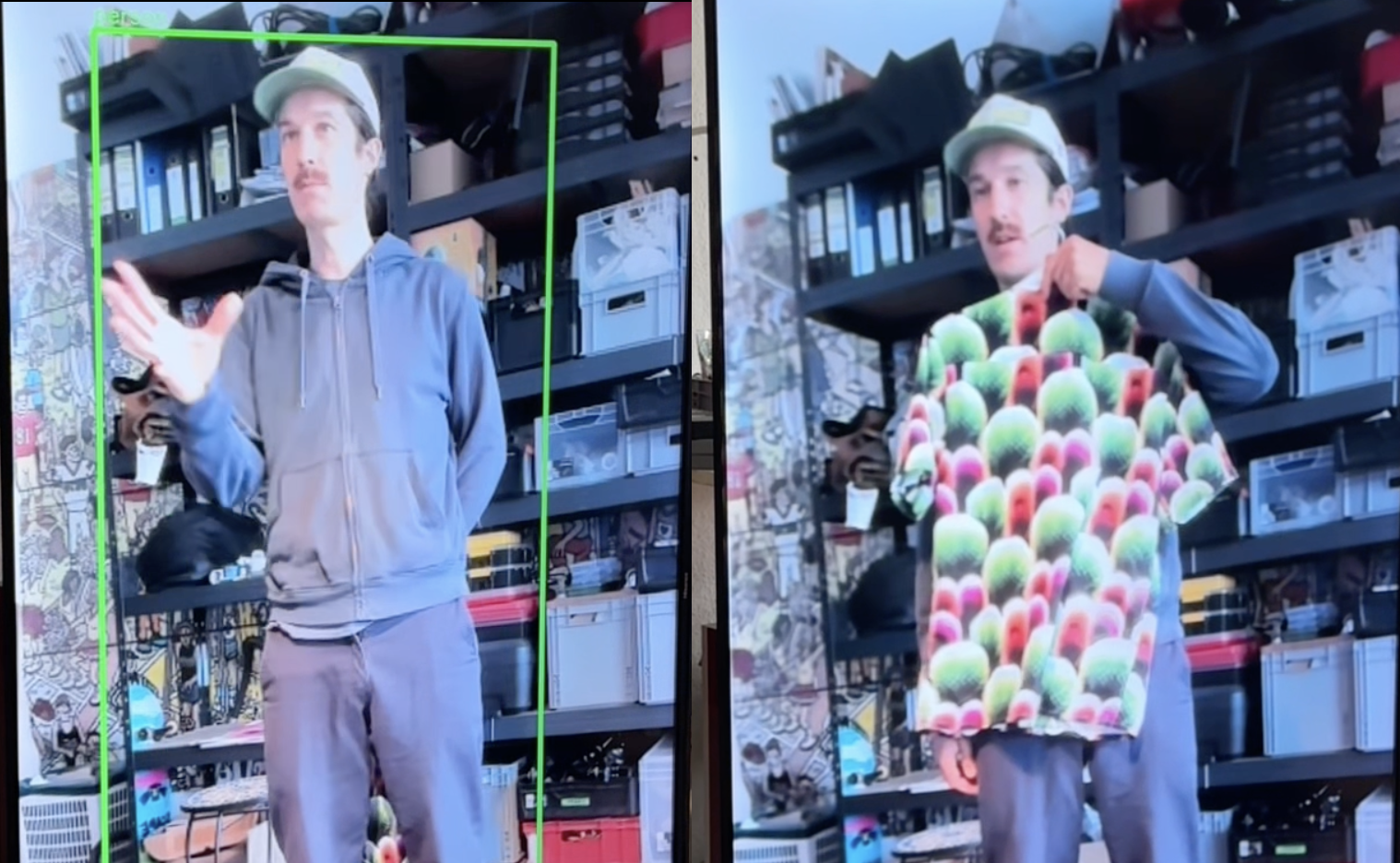
Art project unveiled clothing that fools person detection in YOLO algorithms

Artist Simon Weckert designed a shirt with a “digital camouflage” pattern that suppresses person recognition by cameras using YOLO detection algorithms, in response to the deployment of AI surveillance cameras by Berlin police.

What you get out of it

Individuals who want to limit automatic surveillance by AI cameras gain a concrete tool that works according to its creator: clothing with a pattern that suppresses the “person” classification in YOLO algorithms, although its effectiveness against specific deployed systems is uncertain because operators do not disclose the type of algorithm.

1 source
Details and sources →
worth noting Productivity

iQuest: AI does not replace developers, but shifts their role towards architecture and business

iQuest argues that AI does not replace developers, but changes their role – from writing code to architecture, business logic and reviewing AI outputs. According to the company, AI can create an application with a single prompt, but the result is a prototype, not a finished product.

What you get out of it

According to iQuest, the focus of developers' work is shifting from writing code itself to designing architecture, understanding business requirements, and reviewing and guiding AI outputs – those who focus solely on generating code lose their competitive advantage.

1 source
Details and sources →
worth noting Security

The platform Cara faced three scraping attacks for AI training; the person behind the first offered to help protect artists

The platform Cara faced three scraping attacks in August 2026 (12 million works/12 TB, 8.5 million links, 123 thousand images). After apologizing, the person behind the first attack decided to collaborate on an open-source tool to protect artists.

What you get out of it

Creators publishing their work on platforms like Cara have no reliable protection against their work being downloaded en masse for AI training, even on sites that position themselves as a safer alternative to Instagram — switching to another platform does not eliminate the risk of scraping.

1 source
Details and sources →
NVIDIA worth noting Business and investment

Jensen Huang again claims that Nvidia has achieved AGI while also calling the term meaningless

Nvidia CEO Jensen Huang said on an earnings call that the company had achieved AGI for many tasks, but immediately afterward described the term as meaningless without a clear definition. He repeated a similar claim from March. OpenAI, Anthropic and other companies use their own, mutually inconsistent definitions.

What you get out of it

People following AI developments should approach statements such as “we have achieved AGI” critically, because even the creators themselves do not agree on a definition of the term, and it often serves as a marketing tool.

1 source
Details and sources →
worth noting Hardware

Plaud One: earbuds for meeting notes with AI agents and an eSIM case for remote control

Plaud has opened preorders for Plaud One earbuds, whose AI agents connected to Gmail, Google Calendar, Notion and Slack automate tasks after meetings. The case with eSIM enables control of the agents without a phone. Price: 249 dollars, delivery in the 4th quarter of 2026, as part of a limited trial run.

What you get out of it

A user who preorders Plaud One will get earbuds that record calls and in-person meetings, with an AI agent that can independently write a follow-up email or create a document after transcription. Thanks to the eSIM in the case, the user can control them without a phone or computer, shifting note-taking from a one-off transcription to a partially automated workflow.

1 source
Details and sources →
worth noting New models

The Intern team described the scientific agentic model Intern-S2-Preview-397B for multimodal scientific reasoning

The Intern team published a description of Intern-S2-Preview-397B (397 billion parameters) on arXiv for multimodal scientific reasoning and long agentic tasks. According to the authors, it achieves competitive to leading results on scientific and agentic benchmarks; a separate Memory Decoder module enables specialization…

What you get out of it

Researchers and developers working with scientific data can explore the described approach to specializing a large model using the Memory Decoder module without having to retrain the entire base model, which can serve as inspiration for their own projects.

1 source
Details and sources →
worth noting Business and investment

Restate raises $20M Series A for durable workflow infrastructure for AI agents

Berlin-based startup Restate, which builds infrastructure for reliable (durable) multi-step workflows, has raised $20M in a Series A round led by Singular. The technology has proven to be key for running AI agents.

What you get out of it

Developers building agentic systems with multi-step workflows may consider durable execution tools such as Restate or Temporal instead of building their own outage-resilience solution.

1 source
Details and sources →
worth noting New models

An Anthropic engineer explains why the writing quality of Claude models has declined

Anthropic engineer Jackson Kernion explained why the writing of Claude models has gotten worse despite growing performance in math and code — according to him, the models have learned to write for other AI models, not for humans.

What you get out of it

Users who use Claude models to write texts for people may encounter worse readability of outputs in newer versions and should explicitly ask for a simpler style.

1 source
Details and sources →
Google worth noting update Other

Google DeepMind: Gemini 4 model is in the fine-tuning phase, release planned earlier than end of year

Google DeepMind head Koray Kavukcuoglu said that the Gemini 4 model is in the fine-tuning phase and the company plans to release it much earlier than by the end of the year. He previously said that leadership in frontier AI is the company's sole priority; the Gemini 3.5 Pro model, despite being announced, was never released.

New: Gemini 3.5 Pro was never released, even though it was announced in May 2026; the project missed 3 deadlines; Demis Hassabis stepped down from leading Google DeepMind in August 2026; Kavukcuoglu replaced him; Kavukcuoglu explicitly rejects AGI as a priority, calling it 'not the right conversation'; Google DeepMind operates under competitive pressure as a 'Gemini factory' (a model-production facility); Gemini 4 is in the 'early phase of post-training', with release planned 'much earlier' than by the end of the year

What you get out of it

Developers and users relying on Gemini models should not plan around a specific release date for Gemini 4 – the company only talks about trying to release it "as soon as possible," without a binding deadline.

✓ 2
Details and sources →

When personal experience proves useful

Does it make sense for a team too?

Look at the same topics through the lens of processes, risks, and implementation within a company.

Go to the company radar →