Skip to content

A practical perspective for individuals

Less monitoring. More value.

We turn new tools and features into one question: what can you do with them today, without unnecessary hype?

  • AvailabilityIs it actually out?
  • BenefitWhat work could this improve?
  • First stepWhat is worth verifying?
939 practical events in the selection 72 active sources Updated

Practical radar

What deserves your attention

Browse the archive →
Amazon worth noting Coding

AWS described the KnowledgeForge architecture for automated knowledge base generation and curation from ITSM tickets

AWS described KnowledgeForge, a system that generates new knowledge base articles from resolved ITSM tickets using Claude Sonnet 4.5 in Amazon Bedrock and uses Amazon S3 Vectors to remove duplicates and assess content quality. A human approves the outputs.

What you get out of it

Developers and architects building document processing pipelines with generative AI get a concrete, reusable pattern from AWS: duplicate detection using embeddings in Amazon S3 Vectors, content generation with RAG through Amazon Bedrock, and orchestration through AWS Step Functions.

1 source
Details and sources →
worth noting Local AI

Nightrun: a runtime for running LLMs without an operating system on x86 and Raspberry Pi 5

The Nightrun project released a runtime that allows large language models to run without an operating system. It works on both x86 and Raspberry Pi 5 with at least 4 GB RAM and requires UEFI. The code is under the MIT license and is available on GitHub.

Part of a broader thematic overview; only this AI event has been covered.

What you get out of it

Developers and enthusiasts can try running LLMs on Raspberry Pi 5 or an x86 device without having to install and manage an operating system.

1 source
Details and sources →
worth noting Other

Anthropic reported increased error rates for selected Claude models

Anthropic reported increased error rates on its status page for the models Claude Mythos 5, Fable 5 and Haiku 4.5 (the title also mentions Opus 5). claude.ai, API, Claude Code and Claude Cowork were affected; a fix was being implemented.

What you get out of it

Users of claude.ai, Claude API, Claude Code or Claude Cowork may have encountered error responses from the affected models at that time without there being a problem on their side.

✓ official
Details and sources →
worth noting Coding

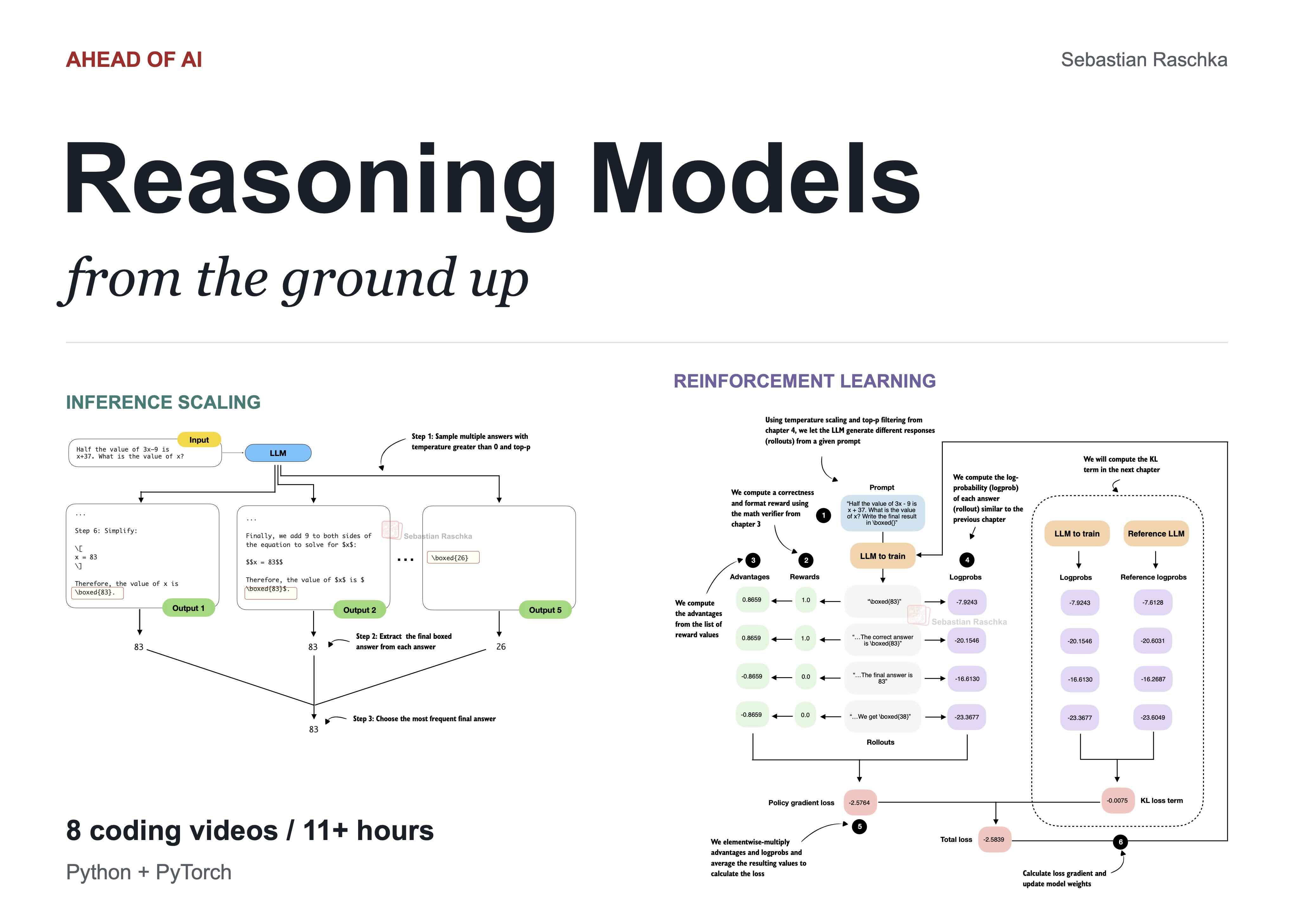
Sebastian Raschka releases eight videos on implementing reasoning models, totaling 11 hours

Sebastian Raschka has released an 11-hour video course demonstrating how to evaluate and improve reasoning models in Python using PyTorch, starting with a small pretrained model from the Qwen3 family. The introductory examples can run on a CPU; the author recommends a GPU for later training.

What you get out of it

If you are familiar with Python and PyTorch, you can study the materials independently without taking the previous course.

1 source
Details and sources →
Anthropic worth noting update Coding

Tree Appreciator was created from a single prompt, according to Simon Willison

Simon Willison says the game Tree Appreciator was created using Claude Opus 5.5 from a single prompt without further instructions. He links to both a playable browser version and a conversation transcript.

New: According to the author, the game was created from a single prompt without further instructions or revisions.; The author links to a playable browser game and a conversation transcript.

What you get out of it

Anyone interested in building their own game prototype can follow the approach described using the standard Claude chat interface, which Willison also used on his phone.

1 source
Details and sources →
worth noting Productivity

Spotify launches Taste Profile feature in the US for adjusting recommendations via natural language

Starting Wednesday, Spotify is launching the Taste Profile feature in the US for Premium subscribers (18+), allowing users to adjust the recommendation algorithm for music, podcasts, and audiobooks using natural language. The feature also affects Discover Weekly and Spotify Wrapped and is currently in beta.

What you get out of it

Spotify Premium users in the US can now use text to directly adjust how the algorithm recommends music, podcasts, and audiobooks, including removing unwanted patterns (e.g., music played while sleeping or listening by someone else on a shared account).

1 source
Details and sources →
worth noting Security

Adoption of AI scribe in Australian healthcare: concerns about errors in records and protection of patient data

According to the report by Digital Rights Watch, over 40 % of Australian doctors use AI scribe for consultation notes; up to 20 % of records contain errors affecting diagnosis, and there is a lack of transparency about how patient data is handled.

What you get out of it

According to the report, a patient whose consultation is recorded by an AI scribe tool has no assurance that the notes reflect what actually happened (errors, hallucinations, bias based on ethnicity or language), nor transparency about where their health data goes.

1 source
Details and sources →
Anthropic worth noting update New models

OpenAI claims that GPT-5.6 Sol outperformed Opus 5 on ARC-AGI-3 – but only with its own testing environment

OpenAI states that GPT-5.6 Sol achieved a score of 38.3 % on ARC-AGI-3 compared with 30.2 % for Opus 5 from Anthropic. However, this holds only with the custom API configuration used by OpenAI; in the official test, GPT-5.6 Sol scores only 7.8 %.

New: OpenAI achieves 38.3 % on ARC-AGI-3 with its own API setup (Retained Reasoning + Compaction); In the official harness without these features, GPT-5.6 Sol scores only 7.8 %; ARC-AGI-3 was deliberately designed without external aids to measure raw model performance; Retained Reasoning and Compaction are not part of the official testing environment; Benchmark results reflect both the model and the technical setup around it

What you get out of it

When reading benchmark rankings, you need to verify that the figures being compared come from the same testing environment – a difference of 7.8 % versus 38.3 % for the same model shows that a score alone, without methodological context, can be misleading.

1 source
Details and sources →
worth noting Coding

Lovable plans to expand its vibe-coding platform with business automations and AI summaries for small business owners

The vibe-coding platform Lovable says it plans to offer business automations and daily AI summaries for small business owners next year. The company states that 80% of users come with a financial motivation, but only 35% of them are currently making money from their project.

What you get out of it

Anyone running a small business (e.g., an online shop, selling their own creations) and considering vibe-coding tools may in the future also get business automations and AI summaries instead of just website creation – but for now this is an announced plan, not an available feature.

1 source
Details and sources →
worth noting Productivity

When to use an AI chatbot for web search and when classic Google

An analysis by Wired (citing research by Stanford University and UC San Diego) compares AI chatbots and classic search: AI is good for simple as well as complex queries with source synthesis, but fails when precise sources are missing and selects sources based on relevance, not authority.

What you get out of it

When searching for information in everyday use, it's worth distinguishing when an AI chatbot pays off (simple queries, complex queries requiring synthesis of multiple sources) and when classic search is better (precise citations, numbers, specifications, current news, high-risk queries).

1 source
Details and sources →
worth noting AI agents

Simon Willison: the key skill with coding agents is giving instructions and verifying results, not reading every line

Simon Willison argues that a key skill when working with coding agents is being able to give them clear instructions and then verify the correctness of the changes made – and that reading every line of code is not the most effective way to do this.

What you get out of it

Developers working with coding agents should develop two specific skills – giving the agent clear instructions and verifying that the changes made match the task – while recognizing that reading every line of code is neither the only nor the most effective way to verify this.

1 source
Details and sources →
worth noting Productivity

Delegating work to generative AI carries a hidden risk of fabricated facts and declining critical thinking

The cases involving the South African government and Deloitte showed that AI can invent citations and authors. A survey of 48 000 people found that 66 % of them use AI regularly, but 61 % have no training and the main motivation is fear of falling behind, not quality.

What you get out of it

Anyone who uses AI outputs without verifying the underlying source material will not recognize the risk of fabricated facts or citations until it causes a problem – and without training (which 61 % of users lack, according to the cited survey), these blind spots are harder to recognize.

1 source
Details and sources →

When personal experience proves useful

Does it make sense for a team too?

Look at the same topics through the lens of processes, risks, and implementation within a company.

Go to the company radar →