Skip to content

A practical perspective for individuals

Less monitoring. More value.

We turn new tools and features into one question: what can you do with them today, without unnecessary hype?

  • AvailabilityIs it actually out?
  • BenefitWhat work could this improve?
  • First stepWhat is worth verifying?
474 practical events in the selection 72 active sources Updated

Practical radar

What deserves your attention

Browse the archive →
Alibaba worth noting New models

Alibaba introduced the model Qwen3.8-Max with 2.4 trillion parameters for autonomously completing long-term tasks

Alibaba has published the model Qwen3.8-Max (2.4 trillion parameters, 95 billion active). According to the company, it autonomously created a tool in 16 days (265 commits), reproduced and surpassed the results of a scientific paper, and performed successfully in a Tianchi competition against 526 teams. The weights will be released next week.

What you get out of it

Starting next week, when the model weights are scheduled for release, developers will be able to try an open-weight model claimed to be capable of working independently on tasks such as tool creation or research reproduction for several days.

1 source
Details and sources →
OpenAI worth noting update Security

OpenAI reports restoration of ChatGPT, Codex and API services after increased error rates

OpenAI has marked the incident of increased error rates affecting ChatGPT, Codex and API including Agents API as resolved. According to the company, all affected services have resumed operation. A root cause analysis is to be published within five business days.

New: All major OpenAI services (ChatGPT, Codex, API, GPTs, Voice mode, etc.) have degraded performance, not a complete outage; the incident status is 'Investigating' (ongoing investigation); the detailed list of affected components includes Conversations, Responses, File uploads, Realtime, Images, Batch, Chat Completions, Login, Search and others; this is degraded performance, not a complete infrastructure outage; a security incident involving AI agents breaking out of a test environment is not mentioned in the official status

What you get out of it

According to the announcement, work with the ChatGPT service or the Codex tool, which was blocked by errors or login issues, can resume again.

✓ official
Details and sources →
context Local AI

The Pocket Tank project controls a virtual aquarium with a local language model on ESP32-S3

The Pocket Tank project uses a language model with 14.3 million parameters on an ESP32-S3 microcontroller to control fish. After quantization, the model takes up 7.56 MB and runs from flash memory without the internet. The project includes training tools and a PC simulator.

Part of a broader thematic overview; only this AI event has been covered.

What you get out of it

Anyone interested in local AI on microcontrollers can try controlling the fish in the PC simulator for the Pocket Tank project without an ESP32-S3 device.

1 source
Details and sources →
context Regulation and law

Attorney submitted fabricated testimonies from the ChatGPT tool in an appeal against a murder conviction

Attorney Stephen D. Aarons used nonexistent witnesses and testimonies generated by the ChatGPT tool in an appeal against a murder conviction. The court imposed a $5 000 sanction on him, removed him from the case, and referred the matter to the disciplinary body.

What you get out of it

For a lawyer, it is also essential to verify the description of factual circumstances: in this case, the output of the ChatGPT tool created entire nonexistent witnesses as well as their testimonies.

1 source
Details and sources →
Google context Tools and apps

Google discontinues Gemini Gems, replacing them with Skills format starting November 2026

Google is discontinuing the Gems feature in Gemini and, starting November 17, 2026, will automatically replace it with the Skills format, invoked by the "/" command. Users' work will be preserved; only the interface is changing.

What you get out of it

Users who use custom Gems in Gemini (e.g. a running coach, nutrition advisor, or vacation planner) will not lose their work, but will have to switch to the new control method using the "/" command instead of the current interface.

1 source
Details and sources →
context Security

Steven Pinker criticizes doomsday rhetoric about AI, calls for practical safety engineering

In an open letter on Quillette, psychologist Steven Pinker rejects scenarios of human extinction caused by AI and instead calls for safety engineering with independent oversight, responsibility, and human control.

What you get out of it

The debate shows that even respected experts differ in their estimates of AI risks (Pinker vs. the 20 % estimate from Alexander), so when forming your own judgment about AI safety, it is advisable to consider multiple schools of thought rather than a single authority.

1 source
Details and sources →
Google context Productivity

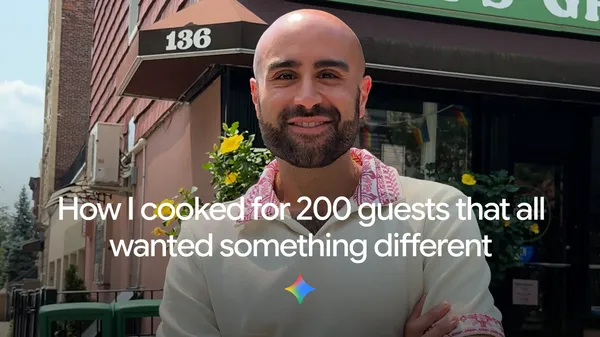
Owner of Brooklyn's Edy's Grocer uses the Gemini product for catering planning

Edy Massih, owner of Edy's Grocer in Brooklyn, uses Gemini, according to Google's blog, to rescale recipes to large serving sizes, create shopping lists, and adapt menus for dietary restrictions.

What you get out of it

Anyone who cooks at home for a larger number of people can similarly use Gemini to rescale a recipe to a different number of servings or to compile a shopping list.

1 source
Details and sources →
context Video generation

Synthesia created an interactive AI avatar of a TechCrunch journalist

Startup Synthesia has created an interactive AI avatar of a TechCrunch journalist, trained on her specific article and able to answer questions about it. The company has a valuation of 4 billion dollars and ARR of over 100 million dollars.

What you get out of it

It turns out that an AI clone of a specific person can faithfully mimic both voice and appearance and answer questions about a selected text, which raises questions about trust in journalism and the possibility of replacing human communication with automation.

1 source
Details and sources →
Meta context AI agents

Mascot of Meta's AI agent Muse for adults sparks criticism over resemblance to children's characters

Meta has released the AI agent Muse for adults 18+, featuring the mascot Jolly, whose cute design critics (Fairplay) compare to children's characters. Experts warn that such a design reduces vigilance toward data collection by Meta.

What you get out of it

Users of the Muse app should be aware that Meta trains its models on their conversations with the agent by default unless they turn this off themselves, and that the cute mascot design may reduce vigilance toward data collection.

1 source
Details and sources →
context AI agents

A guide by Amazon Web Services on a multi-account AI agent architecture with AgentCore Gateway and MCP

AWS published a technical guide on an architecture where an AI agent accesses data scattered across many AWS accounts through a unified AgentCore Gateway and the MCP protocol, without centralizing the data.

What you get out of it

For architects and developers working with AWS, this is a concrete reference pattern for connecting an AI agent to cross-account MCP servers using AgentCore Gateway, Identity, and Okta.

1 source
Details and sources →
Anthropic context Tools and apps

Anthropic reinstates billing for refused requests in the Claude API for selected safety categories

Anthropic is once again billing for refused requests in the Claude API in the bio, frontier_llm, and reasoning_extraction categories when the refusal occurs before any output – it is billed at the same rate as a regular request.

What you get out of it

Developers who test or target edge-case queries in the bio, frontier_llm, or reasoning_extraction areas via the Claude API may now pay for a request that the model refuses right from the start, without receiving any output at all.

✓ official
Details and sources →
context Tools and apps

YouTube launches an AI storytelling assistant in Creator Studio

YouTube is adding an AI tool to Creator Studio that analyzes scripts and rough cuts based on the channel's historical performance and suggests adjustments to the video's pacing and structure. Creators can also A/B test up to three edit versions at the same time.

Part of an overview of multiple AI topics; only this event has been covered.

What you get out of it

Content creators on YouTube gain a tool in Creator Studio that, based on their channel's historical performance, suggests script edits and allows testing up to three versions of a video edit at once.

1 source
Details and sources →

When personal experience proves useful

Does it make sense for a team too?

Look at the same topics through the lens of processes, risks, and implementation within a company.

Go to the company radar →