

Google expands eighth-generation TPU lineup with 8tx and 8i Max variants
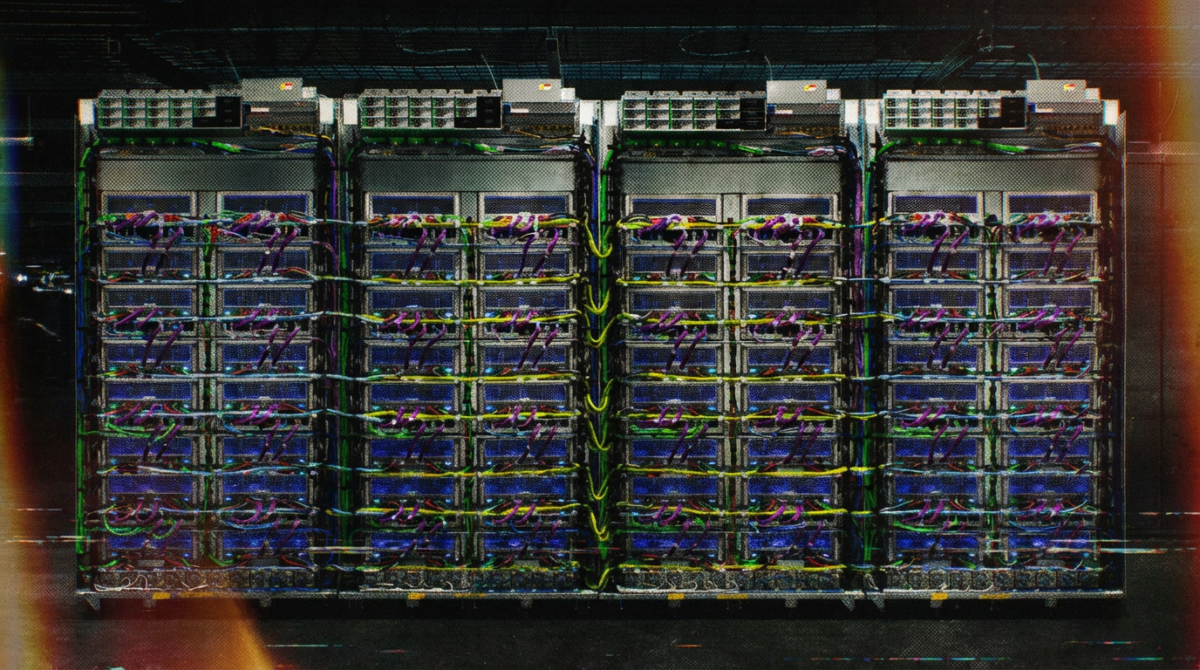
Google has released two new eighth-generation TPU variants: TPU 8tx for encrypting data during processing, and TPU 8i Max with doubled performance and memory thanks to combining two chips into a single package. These are configurations of an existing chip, aimed at expanding the offering for external customers in competition with Nvidia.
Google has expanded its eighth generation of AI accelerators with two new variants: TPU 8tx and TPU 8i Max. According to the company, this is the first time it has released four TPU variants within a single year. Both new products are built on existing silicon — this is not a new chip generation, but new system configurations (different packaging, network interconnect, and memory layout around the same processor). Google describes this modular approach as a deliberate step that allows it to deliver new hardware variants on a timescale of months, not years.
TPU 8tx is intended for companies and government institutions working with sensitive data. According to the company, data and model weights remain protected and isolated even during active processing, not just at rest and in transit — Nvidia offers a similar feature for GPUs through its confidential computing architecture. The system uses the Boardfly network, developed for real-time inference, and is said by the company to achieve up to a twofold reduction in latency compared to TPU 8t. Google states that companies can fine-tune models, distill large models into smaller ones, and train AI agents using reinforcement learning on a single system, without sensitive data having to travel between different clusters.
TPU 8i Max addresses a different problem — memory bandwidth for agents working with large codebases or long video. Google combined two TPU 8i chips into a single package, doubling the computing power, memory, and memory bandwidth — that is, performance per square meter of data center — within the same rack.
Google has also released the TorchTPU tool as open source, which is meant to allow PyTorch code to run on TPU with minimal modifications; the popular inference frameworks vLLM and SGLang are also supported. The company states it now has nearly 100 external TPU customers, and it sees the expansion as a shift from an internal tool to a platform offered externally — in the context of the market's transition from expensive training to everyday model operation (inference), where specialized chips are gaining ground. According to the text, Amazon, Microsoft, and OpenAI are heading in the same direction with their own accelerators; Nvidia responded to the pressure by acquiring a team and signing a licensing agreement with Groq.
Why it matters
For companies running AI in the cloud, this means a concrete alternative to Nvidia GPUs in two specific situations: processing sensitive or regulated data (TPU 8tx) and running memory-intensive agents or multimodal tasks (TPU 8i Max). Expanded support for PyTorch, vLLM, and SGLang also lowers the technical barrier to trying out TPU, without having to change existing developer code.
Two audiences, two different impacts
What this means
For individuals
Thanks to the open-source tool TorchTPU and support for the vLLM and SGLang frameworks, developers using PyTorch can more easily port inference code to TPU without major modifications.
For a business
Companies running AI workloads in the cloud are getting another hardware option beyond Nvidia — TPU 8tx addresses data protection requirements for sensitive/regulated tasks, while TPU 8i Max reduces space and performance costs for memory-intensive inference deployments (e.g., agents working with large codebases or video).
StrategyCheck the original
Event sources
only one source so far · 1 publisher, 1 independent. We count feeds from the same owner only once.