

Baidu unveils Apollo World world model for training robotaxis
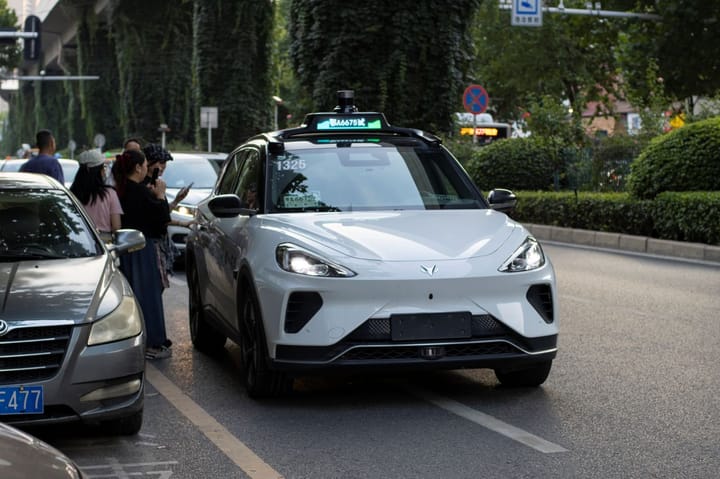
Baidu has unveiled the Apollo World world model, trained on 217.48 million miles of data from the Apollo Go robotaxi fleet. According to the company, the model generates the equivalent of three years of real-world testing in a day, though running it requires significant computing capacity.
At the AI Day Apollo event, Baidu unveiled Apollo World, a world model designed for training autonomous vehicles, including the Apollo Go robotaxi fleet. The model was trained on 217.48 million miles of data from the Apollo Go fleet. According to Baidu, the model can generate the equivalent of approximately three years of real-world testing in a single day.
Apollo World illustrates the growing use of world models to bring generative AI beyond purely knowledge-based tasks (coding, cybersecurity) into the physical world. According to the source, comparable projects include Google DeepMind's Waymo World Model, built on the Genie 3 foundation model and converting video footage into 3D simulations, Waabi's proprietary world model for training a virtual truck fleet, and Nvidia's open world model Cosmos for robotics and autonomous systems.
Analyst Lian Jye Su from Omdia said the automotive industry is among the most advanced sectors for deploying world models, alongside the gaming industry. He also pointed out the main weakness of these models: high costs for both training and real-time operation, with most world models requiring one GPU per active user. According to Su, despite these costs, investment in world models is worthwhile if strong and accurate foundational data can be obtained, enabling faithful simulation of the physical world.
Why it matters
For companies developing autonomous vehicles or robotics, world models promise faster and cheaper testing cycles in simulation instead of costly real-world testing. However, the source also notes that running these models is itself computationally demanding – typically one GPU per active user – which limits their scalability and must be weighed against the benefits of accelerated testing.
Relevant practical impact
What this means
For a business
For companies in the autonomous vehicle, robotics, or simulation space, Apollo World shows that world models can significantly shorten and cheapen the testing cycle, but running these models requires massive computing capacity (typically one GPU per active user), which must be factored into the cost calculation.
Development More business impacts →Check the original
Event sources
only one source so far · 1 publisher, 1 independent. We count feeds from the same owner only once.