Skip to content

A practical perspective for individuals

Less monitoring. More value.

We turn new tools and features into one question: what can you do with them today, without unnecessary hype?

  • AvailabilityIs it actually out?
  • BenefitWhat work could this improve?
  • First stepWhat is worth verifying?
939 practical events in the selection 72 active sources Updated

Practical radar

What deserves your attention

Browse the archive →
GitHub context Coding

A developer used the Claude Opus 5.5 model to build an experimental NES processor emulator

With the help of the Claude Opus 5.5 model, Drew Breunig built an experimental GitHub project called nesformer — an NES processor emulator. According to the author, the model independently found and used a 15-year-old processor conformance test suite and created a CLI for running ROM files.

What you get out of it

It shows how the Claude Opus 5.5 model can be guided by an open-ended brief to conduct independent research (finding a test suite) and build a working tool from scratch, which is an inspiration for your own experimentation with agentic coding.

1 source
Details and sources →
Google context Coding

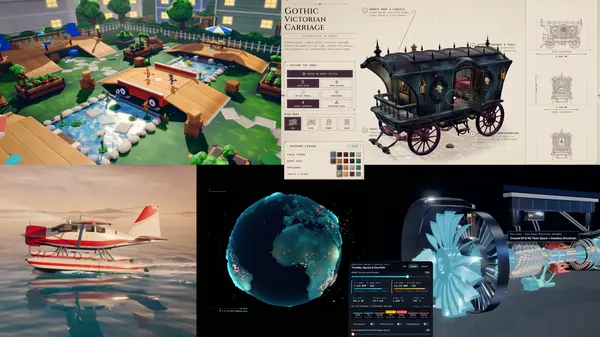
Alex Patrascu used Gemini 4 Argon to create a 3D globe showing fires and earthquakes

According to Google, Alex Patrascu created an interactive 3D globe in Antigravity using the Gemini 4 Argon model. He combined live fire data from NASA with seismic data from U.S. Geological Survey.

Part of an overview of multiple AI topics; only this event has been covered.

What you get out of it

For developers building their own mapping application, the project provides a basis for assessing whether to entrust the model with integrating data, assigning coordinates and creating a 3D visualization.

1 source
Details and sources →
context AI agents

Four employees without an engineering background built the WealthWise prototype in six weeks

According to AWS, four customer-facing employees built the WealthWise prototype during a six-week program with mentors. The financial tool uses multiple AI agents, Node.js, Python Flask, and Amazon Nova models.

What you get out of it

An employee without a technical education can draw on the experience described when planning their own development: with support from mentors, participants gained practical skills by building a prototype for a specific task.

1 source
Details and sources →
context Tools and apps

Radisson Hotel Group created a hotel plugin for ChatGPT with Accenture

Radisson Hotel Group created a plugin for ChatGPT in collaboration with Accenture. According to the source, it helps travelers search for, compare and book hotels while planning trips.

What you get out of it

When choosing accommodation, the plugin described offers a way to search for and compare hotels directly while planning a trip in ChatGPT.

1 source
Details and sources →
context Regulation and law

Australia considers right to data deletion and digital duty of care to also protect non-users of AI

Australia is considering two reforms: the right to delete personal data and an obligation for online services to manage foreseeable risks. The protection could also cover people whose data was entered into conversational AI services by someone else.

What you get out of it

If the reforms are adopted, a person could request the deletion of their data even if someone else entered it into the service. The authors of the article point out that without the ability to find out what information the service stores, this right may be difficult to exercise.

1 source
Details and sources →
context Tools and apps

AWS published a guide for deploying the Qwen3-TTS voice cloning model on SageMaker JumpStart

AWS described the procedure for deploying the Qwen3-TTS-12Hz-1.7B-Base model (Alibaba Cloud) via SageMaker JumpStart to a managed endpoint. The model clones a voice from a short recording without retraining, supporting 10 languages including cross-lingual cloning.

What you get out of it

A developer or ML engineer has a concrete procedure and hardware parameters (SDK, ml.g6.4xlarge instance with an L4 GPU) available for independently deploying a TTS model with voice cloning.

1 source
Details and sources →
context Business and investment

ČSÚ: share of Czech companies using generative AI rose from 6% to a third over three years

According to the Czech Statistical Office, more than a third of Czech companies use generative AI, and among large companies nearly 75%. Three years ago it was only 6% of companies – an increase of more than 500% over three years.

What you get out of it

The likelihood that an individual will also encounter generative AI in their job is increasing – tools that were an exception three years ago are now used by a third of companies and a majority of large companies.

1 source
Details and sources →
Microsoft context Security

Availability outage of selected GPT models in GitHub Copilot

GitHub Status reports reduced availability of the models gpt-5.6-sol-fast, gpt-5.6-sol, gpt-6.1-terra, and gpt-6-luna in Copilot products and IDE interfaces. The cause is an issue at an upstream model provider; choosing a different model or Auto mode is recommended.

What you get out of it

Anyone actively using one of the affected models in Copilot (gpt-5.6-sol-fast, gpt-5.6-sol, gpt-6.1-terra, gpt-6-luna) may encounter degraded performance and should temporarily switch to a different model or Auto mode.

✓ official
Details and sources →
context Regulation and law

British regulator OfS threatens universities with sanctions over insufficient protection of exams against AI

The British Office for Students is threatening universities with sanctions if they fail to introduce AI-resistant exams. A survey of more than 300 respondents at 127 institutions found massive, often undetected use of ChatGPT in essays, with grades comparable to those without AI use.

What you get out of it

For students and people undergoing graded written assignments, the share of oral exams and process-based assessment is likely to increase, in areas where substituting AI for one's own reasoning does not work.

1 source
Details and sources →
context Security

Tencent's chief AI scientist warns of AI-enabled bioweapons and proposes a middle path between open and closed models

Yao Shunyu, chief AI scientist at Tencent, warns that AI will soon be capable of developing bioweapons, and argues that the solution is neither a fully open nor a fully closed model. He points to the Hugging Face incident, where the Claude model refused to analyze attack commands and the open model GLM-5.2 was used instead.

What you get out of it

Users of AI models for sensitive security or medical tasks may encounter overly aggressive filters in closed models (e.g., mistakenly flagging an MRI scan analysis as bioterrorism), while open models can easily be stripped of their safety filters using the Abliteration technique, yielding uncontrolled output.

1 source
Details and sources →
Anthropic context update New models

Increased API error rate for the Claude Mythos 5.2 and Claude Fable 5.2 models

On 19 November 2026 at 09:10 UTC, Anthropic announced on its status page increased request error rates for the Claude Mythos 5.2 and Claude Fable 5.2 models, and the company is investigating the incident. This is related to the fact that these versions recently started enforcing a prefix check for all accounts.

New: The introduction of the prefix check in the 5.2 versions triggered an incident with increased API error rates; The incident was reported on 19 November 2026 at 09:10 UTC on Anthropic's official status page; The incident is under investigation and Anthropic has promised an update

What you get out of it

A developer working with the Claude Fable 5.2 or Mythos 5.2 model APIs should monitor Anthropic's status page and also verify whether their code edits the system message, tools, or earlier messages before sending back a thinking block from a later turn.

✓ official
Details and sources →
context Security

Czech startup Synhawk develops deepfake detection, partners with Vodafone

The startup Synhawk, founded by entrepreneur Lukáš Foral and Stanford researcher Matyáš Boháček, is developing technology for real-time detection of deepfakes and synthetic content. It is working with the operator Vodafone and is in talks with other telecom companies.

What you get out of it

People should be aware that a phone call featuring the voice of a close person asking for money could be a deepfake created from just a few seconds of recording, and should independently verify such requests.

1 source
Details and sources →

When personal experience proves useful

Does it make sense for a team too?

Look at the same topics through the lens of processes, risks, and implementation within a company.

Go to the company radar →