Skip to content

AI for leaders and teams

A market change is useful only when you know what to do with it.

We separate technological developments from business impact. For each event, we identify the area, benefit, risk, and a realistic next step.

  • ImpactWhat is changing for the process or team?
  • TrustIs the claim confirmed by multiple sources?
  • ActionVerify, monitor, or take no action yet?
1396 business-relevant events 72 active sources Updated
Productivity Processes Development Sales and marketing People and management Risks and compliance

Business radar

Events that affect decisions

Sorted by business relevance, significance and recency.

OpenAI context Productivity Productivity

OpenAI expands ChatGPT for Healthcare with computer-use agents and new plugins

OpenAI is expanding its ChatGPT for Healthcare product with computer-use agents, improved clinical answers, and new plugins that integrate with healthcare software.

Business impact

Healthcare organizations will be able to deploy new plugins connecting the ChatGPT for Healthcare product with existing healthcare software and use computer-use agents to automate routine work tasks, which, according to OpenAI, helps actually get work done in operations.

✓ official
Details and sources →
Microsoft context Security Productivity

Availability outage of selected GPT models in GitHub Copilot

GitHub Status reports reduced availability of the models gpt-5.6-sol-fast, gpt-5.6-sol, gpt-6.1-terra, and gpt-6-luna in Copilot products and IDE interfaces. The cause is an issue at an upstream model provider; choosing a different model or Auto mode is recommended.

Business impact

Companies whose developer teams rely on Copilot with these specific models may experience a temporary slowdown in development productivity; the solution is to switch to an alternative model or Auto mode until GitHub resolves the issue with the provider.

✓ official
Details and sources →
Amazon context Tools and apps Risks and compliance

Amazon describes a method for tracking and limiting Amazon Bedrock costs by IAM identity

Amazon has described a method for tracking and limiting Amazon Bedrock spending by individual IAM identities using AWS Budgets and Cost and Usage Reports 2.0 without the need to write custom code.

Business impact

Companies using Amazon Bedrock can now track and limit generative AI costs by individual users, teams, or applications without custom development – key for budget control before expanding AI access across the organization.

1 source
Details and sources →
Amazon context Open-source Development

AWS releases a catalog of 23 reusable components for generative AI

AWS has released a catalog of 23 production-ready components for generative AI (RAG, document processing, agent scaffolding). The DoorDash, Lyft, and Ricoh cases demonstrate a shortening of development from months to weeks and a reduction of engineering hours by over 90%.

Business impact

Companies building generative AI solutions on AWS can replace repeated development of RAG pipelines, document processing, or agent scaffolding with ready-made, security-vetted components, which according to documented cases shortens development from months to weeks and reduces engineering costs.

✓ official
Details and sources →
context Local AI Strategy

Kora Systems announces a Linux desktop operating system with integrated AI models and agents

Kora Systems (led by Kirt McMaster, co-founder of Cyanogen) has unveiled a Linux desktop OS with integrated AI models and agents. It plans a free launch in 2027 for computers with Intel, AMD, and Snapdragon processors, targeting 45-50 million AI-intensive users.

Business impact

A potential future alternative to Windows aimed at AI-intensive users is emerging, with an enterprise version called Humain OS being prepared in collaboration with Qualcomm and Humain for Snapdragon laptops in 2027; the company also states that Claude and Codex tools have accelerated its own development by at least fivefold.

1 source
Details and sources →
context Security Risks and compliance

Tencent's chief AI scientist warns of AI-enabled bioweapons and proposes a middle path between open and closed models

Yao Shunyu, chief AI scientist at Tencent, warns that AI will soon be capable of developing bioweapons, and argues that the solution is neither a fully open nor a fully closed model. He points to the Hugging Face incident, where the Claude model refused to analyze attack commands and the open model GLM-5.2 was used instead.

Business impact

Companies deploying AI for security analysis or biological research must weigh the risk that closed models will refuse legitimate queries due to filters, while open models can be stripped of their safety mechanisms; programs such as Project Glasswing or Daybreak show that the most capable models for high-risk domains are available only to vetted partners.

1 source
Details and sources →
Anthropic context update New models Risks and compliance

Increased API error rate for the Claude Mythos 5.2 and Claude Fable 5.2 models

On 19 November 2026 at 09:10 UTC, Anthropic announced on its status page increased request error rates for the Claude Mythos 5.2 and Claude Fable 5.2 models, and the company is investigating the incident. This is related to the fact that these versions recently started enforcing a prefix check for all accounts.

New: The introduction of the prefix check in the 5.2 versions triggered an incident with increased API error rates; The incident was reported on 19 November 2026 at 09:10 UTC on Anthropic's official status page; The incident is under investigation and Anthropic has promised an update

Business impact

Companies running production integrations on the Claude Mythos 5.2 and Claude Fable 5.2 models face the risk of increased request error rates until Anthropic resolves the incident, and should check whether the enforced prefix check causes them 400 errors independently of the current incident.

✓ official
Details and sources →
context Coding Development

Cult.fit deploys OpenAI's Codex tool for internal tool development

According to its own statement, the company Cult.fit has deployed OpenAI's Codex tool so that teams across departments can build internal tools themselves and speed up work. The source does not provide details or figures.

Business impact

A case study shows that the company Cult.fit deployed OpenAI's Codex tool so that teams across different functions (not just development teams) could build internal tools themselves and speed up their work. The source does not provide specific figures on savings or the scale of the deployment.

1 source
Details and sources →
Meta context Business and investment Risks and compliance

Meta warns that political opposition after the elections will complicate the construction of AI data centers

Meta President Dina Powell McCormick said that a Democratic victory in the November elections will deepen political opposition to the construction of data centers. The company currently has 23 data centers in the US and five projects with a capacity of 1 GW or more.

Business impact

Companies planning or operating data centers for AI face increased political and regulatory risk following the elections; a model of community support (local electricity, taxes for public services, local workforce) is becoming a condition for successful project approval.

1 source
Details and sources →
context Business and investment People and management

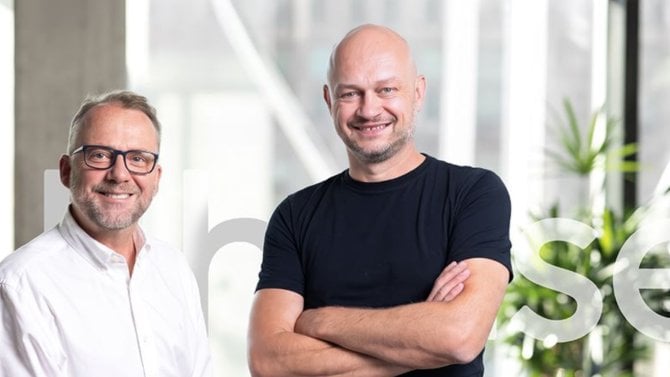
David Pavlík becomes CEO of the Phrase platform

David Pavlík, formerly of BottleCap AI, SpaceX, Netflix, and Kiwi.com, is becoming CEO of Phrase, a company headquartered in Prague. Under his leadership, the multilingual content platform is set to invest more in AI tools for translation.

Business impact

Phrase, whose translation and multilingual content management platform is used by companies such as Uber, Volkswagen, Tripadvisor, or Zendesk, plans under its new leadership to invest more in AI tools for coordinating context and translation quality, which may in the future affect the features available to its enterprise customers.

1 source
Details and sources →
context Security Risks and compliance

Czech startup Synhawk develops deepfake detection, partners with Vodafone

The startup Synhawk, founded by entrepreneur Lukáš Foral and Stanford researcher Matyáš Boháček, is developing technology for real-time detection of deepfakes and synthetic content. It is working with the operator Vodafone and is in talks with other telecom companies.

Business impact

Telecom operators, banks, and companies can integrate synthetic content detection into their communication channels and approval processes to reduce the risk of vishing-type fraud and fake payment documents created using AI.

1 source
Details and sources →
OpenAI context Tools and apps Development

Qodo integrates the Codex model into code review with company knowledge context

The Qodo tool has integrated the Codex model into AI code review and supplemented it with company knowledge and coding standards in order to catch critical issues even before a pull request is opened.

Business impact

Companies using Qodo can incorporate their own company knowledge and coding standards into the code review process, which may reduce the risk of critical (P0) issues moving further along in the development cycle.

1 source
Details and sources →

Wagner Solution

From signal to a safe pilot

We will help you choose a specific process, set up measurement and verify the benefits before the solution is rolled out across the company.

Discuss your company's situation ↗