

Texas police used the AI tool Axon Draft One for a report on a search for a woman after an abortion using the Flock camera network
The Johnson County Sheriff's Office in Texas had the AI tool Axon Draft One write part of a police report about a case in which it searched for a woman after a self-managed abortion using a network of over 80 000 Flock cameras. According to the DA, no crime had been committed; the investigation was prompted by her abusive partner, not her family.
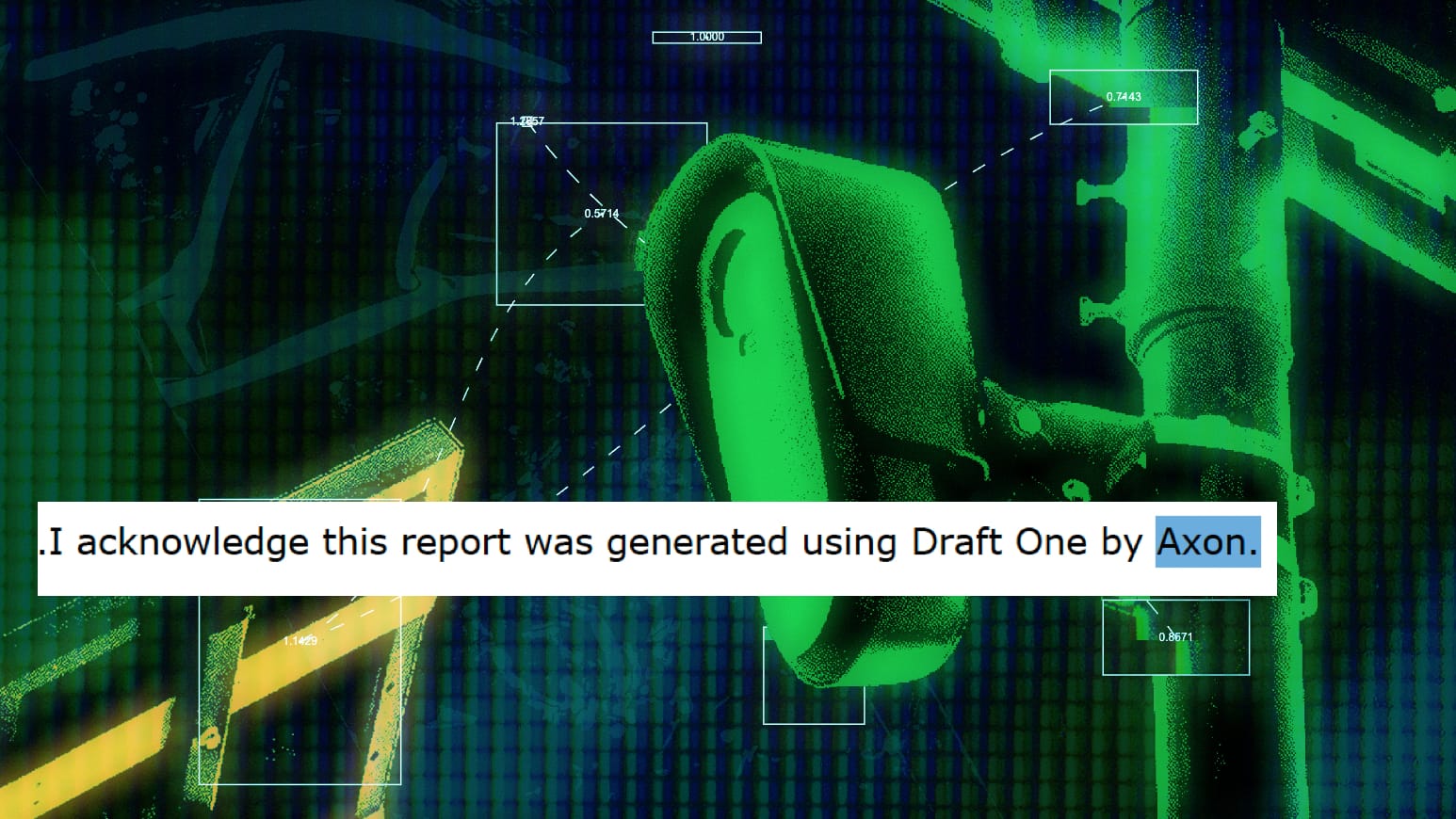
The Johnson County Sheriff's Office in Texas used the AI tool Draft One from Axon to write part of a police report in a case first reported by 404 Media in May 2025 – at the time, sheriff's deputies used a nationwide network of license plate cameras operated by Flock (over 80 000 cameras) to search for a woman who had undergone a self-managed abortion. According to documents available to 404 Media, the report includes the wording “I confirm that this report was generated using Draft One from Axon,” and the tool was used, among other things, to summarize a discussion among sheriff's deputies about the “legal implications of the situation.”
According to the report, sheriff's deputies concluded that the woman did not face criminal prosecution under current Texas law and instead considered the possibility of a civil lawsuit against the pharmaceutical company that supplied the pill. An earlier report obtained by EFF stated that the investigation was initiated by the woman's abusive partner, rather than concerns from her family – yet, according to a leaked recording, the head of Flock, Garrett Langley, repeatedly told law enforcement clients that the search was prompted by the family's concerns for the woman's safety. The officer who conducted the search in Flock stated in the report that he acted out of concern that the woman might have been injured by the man who reported her, and also used the TLO database containing credit card data during the search; the Flock system showed that the woman had previously been in Dallas, but did not show any current location.
The Johnson County Sheriff's Office has so far refused to provide access to bodycam recordings that would clarify how the intervention unfolded – even despite disclosure requests submitted by EFF and 404 Media. Details can be found in the source article.
Why it matters
This shows that police AI report-writing tools are also being deployed in sensitive cases involving reproductive health, without any way to independently verify how faithfully the summary reflects the actual discussion among sheriff's deputies – especially when the agency refuses to release the underlying audio and video data. It also confirms that a nationwide ALPR network can be used to locate a person at the request of a private individual (in this case, an abusive partner), which is relevant to the debate on surveillance, privacy protection, and the accountability of suppliers of such systems.
Two audiences, two different impacts
What this means
For individuals
The case shows that a nationwide network of license plate cameras can trace a specific person's movements in a sensitive personal matter and that an AI-generated police report provides no way to verify what actually happened if the agency refuses to release audio and video recordings.
More practical updates →For a business
For law enforcement agencies and suppliers such as Axon and Flock, the case highlights compliance and reputational risks: an AI report-writing tool was also used in a sensitive case involving abortion, while the agency refuses to release the underlying bodycam recordings and, according to a recording, the head of Flock publicly described the circumstances of the case differently from the police reports.
Risks and complianceCheck the original
Event sources
only one source so far · 1 publisher, 1 independent. We count feeds from the same owner only once.