

New York banned AI in grades 1–8, Los Angeles announced a one-year moratorium on generative AI in schools
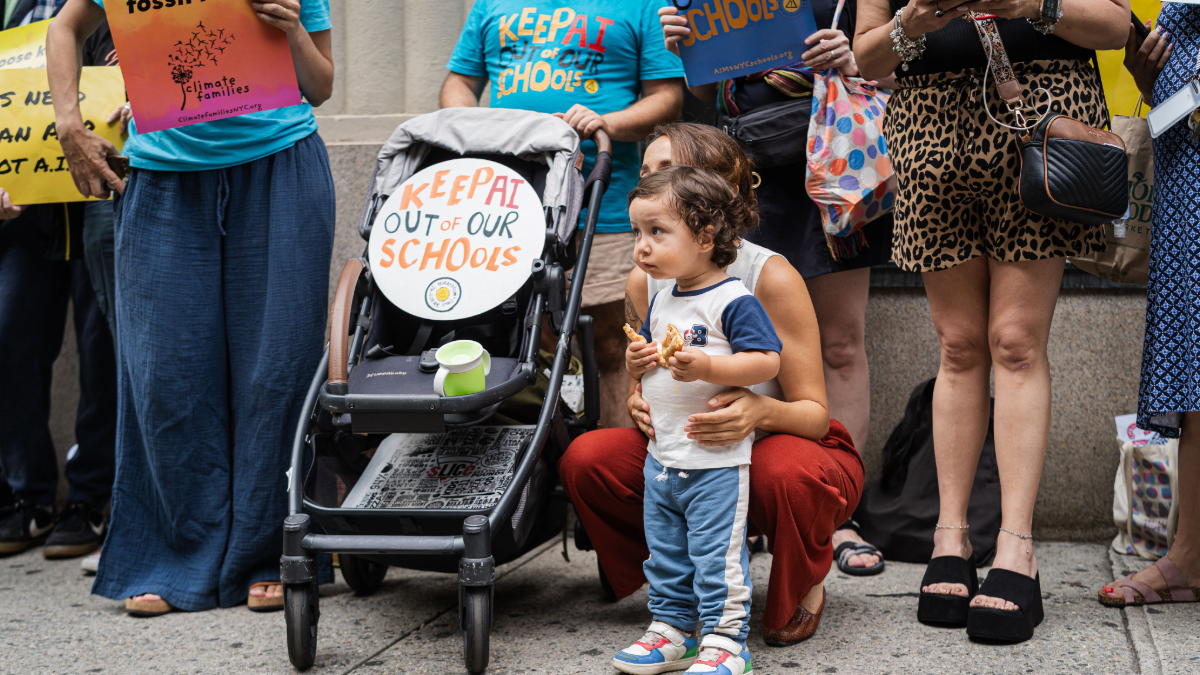
New York has banned student-facing AI in grades 1–8 starting in the new school year, allowing high school students to use only a limited list of tools. Los Angeles Unified School District announced a one-year moratorium on generative AI for approximately 378 000 students on the same day.
New York City announced last Wednesday (around 3 September 2026), through Mayor Zohran Mamdani and Schools Chancellor Kamar Samuels, that it is banning most student-facing AI applications in all grades 1–8 starting in the upcoming school year. Only a limited list of approved tools remains permitted for high school students. On the same day, Los Angeles Unified School District announced a one-year moratorium on generative AI for an estimated 378 000 students. According to the source, the previous policy in Los Angeles was inconsistent—the district had previously banned ChatGPT, then lifted the ban, launched its own chatbot and subsequently shut it down, while official guidance was mostly known only through journalistic reporting.
In the broader context across the United States, according to an overview by Tech Policy Press, most of the approximately 25 largest school districts surveyed (such as Chicago Public Schools) are taking a more cautious approach focused on teaching how AI works and setting boundaries for unacceptable use, without clear rules on exactly when students or teachers may use the tools. Approximately 35 US states have issued their own recommendations, but according to the source, these are mostly nonbinding and leave decisions about specific classroom uses to teachers.
Some smaller districts have introduced more narrowly targeted restrictions: Katy Independent School District near Houston restricted generative AI for grades K–6, and Haddonfield School District in New Jersey banned it for grades K–2. Rules generally become less restrictive at higher grade levels—younger students use AI under supervision, while older students can use preapproved tools independently.
The source text was only partially available. Details can be found in the source article.
Why it matters
Policies on AI use in US schools vary significantly from district to district—from strict bans to a more flexible approach focused on teaching about AI, with no uniform federal standard. For families and teachers, this means keeping track of rules locally and by grade; for companies developing educational AI tools, it means more difficult and fragmented market entry in the largest US school districts.
Two audiences, two different impacts
What this means
For individuals
Parents, teachers and students in New York City and Los Angeles will face different rules starting in the new school year: in New York City, student-facing AI is banned in grades 1–8 and high school students may use only a limited list of approved tools, while in Los Angeles, generative AI use is suspended for one year for all students.
For a business
Companies offering AI tools to schools face a ban in New York City schools for grades 1–8 and a one-year moratorium in Los Angeles Unified School District, closing off the two largest US markets; approaches also vary from district to district, requiring individual approvals instead of a single route into the market.
Risks and complianceCheck the original
Event sources
only one source so far · 1 publisher, 1 independent. We count feeds from the same owner only once.