

Liquid AI has made d1 available for decisions based on text and images
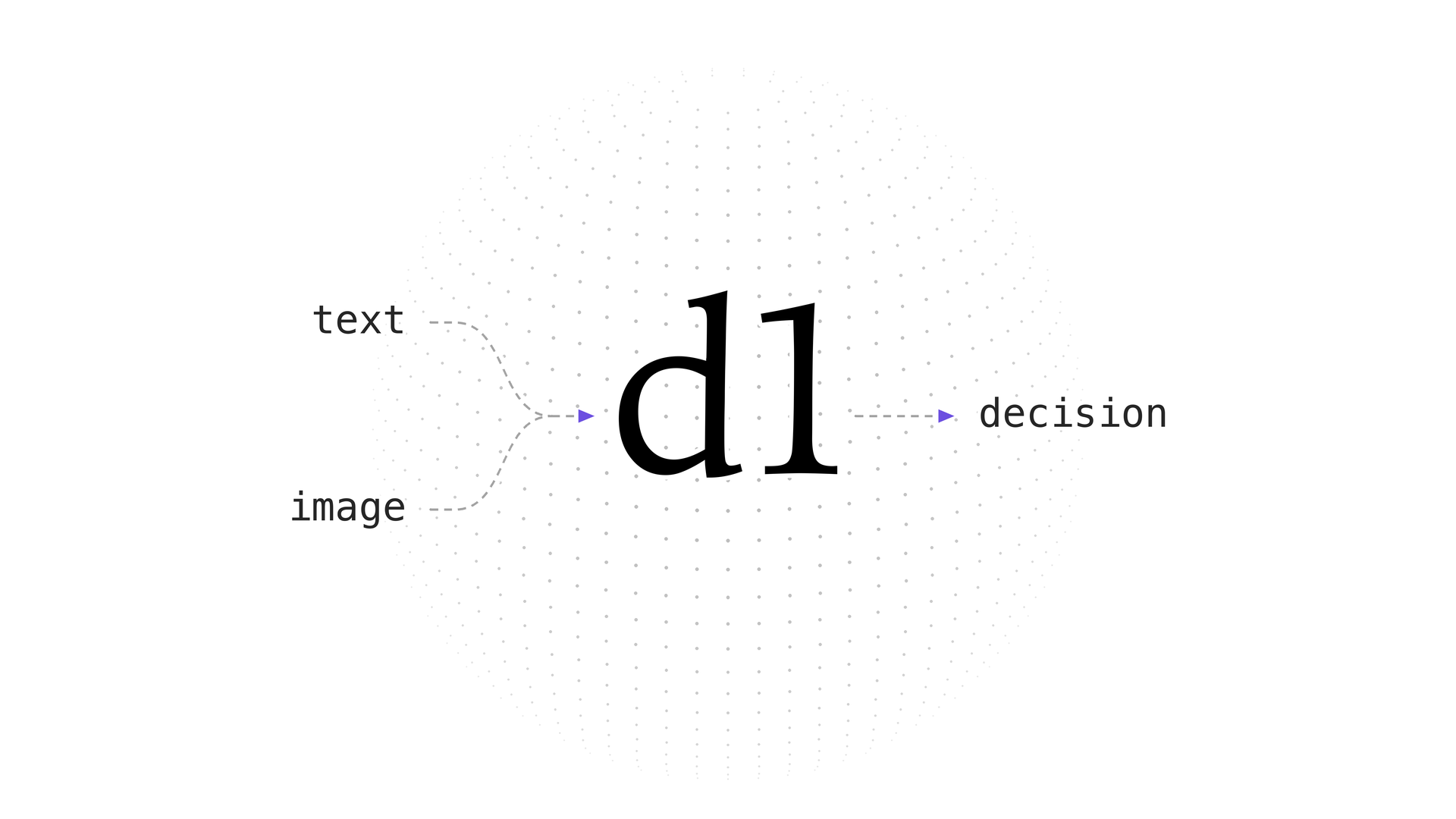
The d1 model from Liquid AI processes both text and images and returns answer probabilities without generating tokens. It is available through the API and d1 Playground. The company lists a price of 0.04 USD per million input tokens and a text-based decision time of 200–300 ms.
Liquid AI has made d1 available with support for text and image inputs. It can be tried in the company console and in d1 Playground, and integrated into applications through the API. Through Vercel and OpenRouter, it is currently available only for text; the company has only promised image support so far.
The model processes the input and questions in a single pass and returns probabilities for possible answers without generating tokens. It supports yes/no questions, category selection and ratings on a scale. According to Liquid AI, a text-based decision takes 200–300 ms. Demonstrations include classifying customer support requests, searching code and visually inspecting products.
According to Liquid AI, d1 achieves an accuracy of 85–97 % in distinguishing defect-free products from defective products on VisA data. The company also reports that, across six tested applications, it at least matched the results of GPT-6.1 Sol in four cases and was 19–200 times cheaper than GPT-6.1 Sol and Claude Opus 5.5. These are the company's own measurements: it ran each application once for each model and compared costs using list prices without caching discounts.
The company lists a price of 0.04 USD per million input tokens; output tokens are not charged. Images count as input at a rate of 1.5 tokens per 32 × 32 pixel block, so a 1024 × 1024 pixel image represents 1 536 tokens. Each question is billed separately, including its text and all images, even when a single request contains multiple questions.
Why it matters
Developers gain access to a service for tasks where an application needs a category, a score or a yes/no answer. Image support also extends its use to visual inspection. At higher usage volumes, separate billing for each question is a significant consideration; the published price comparison also excludes caching discounts, so it may not reflect the costs of a specific deployment.
Release card
d1
Liquid AI
- Inputs
- Inputs are text and images. Outputs are probabilities for answers to yes/no questions, category selections or ratings on a scale, without generating tokens.
- Price
- 0.04 USD per million input tokens. Output tokens are not charged. Each question is billed separately, including its text and all images.
- Availability
- The model is available through the API provided by Liquid AI, in the company console and in d1 Playground. Through Vercel and OpenRouter, it is currently available only for text.
- Latence textového rozhodnutí 200–300 ms According to Liquid AI, processing a text-based decision takes 200–300 ms.
- Vizuální kontrola na datech VisA 85–97 % Liquid AI reports this accuracy in distinguishing defect-free products from defective products from four production lines.
- Context Compaction 52 % odstraněných tokenů According to Liquid AI, the model removed 52 % of tokens in the tested application and retained all tool outputs needed for the task.
- Tetris 70 odstraněných řádků pouze s textem; 81 s přidaným obrazem In a demonstration by Liquid AI, adding an image of the game board increased the number of cleared lines from 70 to 81.
- Wordle 12 z 12 vyřešených her; průměrně 3,8 pokusu In a demonstration by Liquid AI, the model read the game board from a screenshot and solved all 12 games in an average of 3.8 attempts.
- Classifies customer support requests by their content.
- Distinguishes defect-free products from defective products in images.
- Searches code by progressively selecting folders and functions.
- Does not generate continuous text responses; it returns probabilities.
- Does not yet process images through Vercel and OpenRouter.
Liquid AI presents d1 as a replacement for language model calls where the required response is a structured decision. In its own comparison of six applications, the company reports results at least matching those of GPT-6.1 Sol in four cases and costs 19–200 times lower than those of GPT-6.1 Sol and Claude Opus 5.5. It ran each application once for each model and compared costs using list prices without caching discounts.
The card summarizes information from the article and any dated corrections, with a link to the original source. It is not our assessment of the model. It does not yet have a dedicated editorial profile. Model selection and other announcements →
Two audiences, two different impacts
What this means
For individuals
A developer can try making decisions directly from a screenshot. The Wordle demonstration shows image input without the need to create a text description of the game board.
For a business
Companies can evaluate d1 for classifying customer support requests or checking products for defects. However, the published one-off tests do not confirm savings or quality for a company's own process; costs also depend on the number of questions asked about the same input.
ProcessesCheck the original
Event sources
clearly official source · 1 publisher, 0 independent. We count feeds from the same owner only once.