

Expert hired by 3M used ChatGPT to write a report in a lawsuit over a fatal explosion in Houston
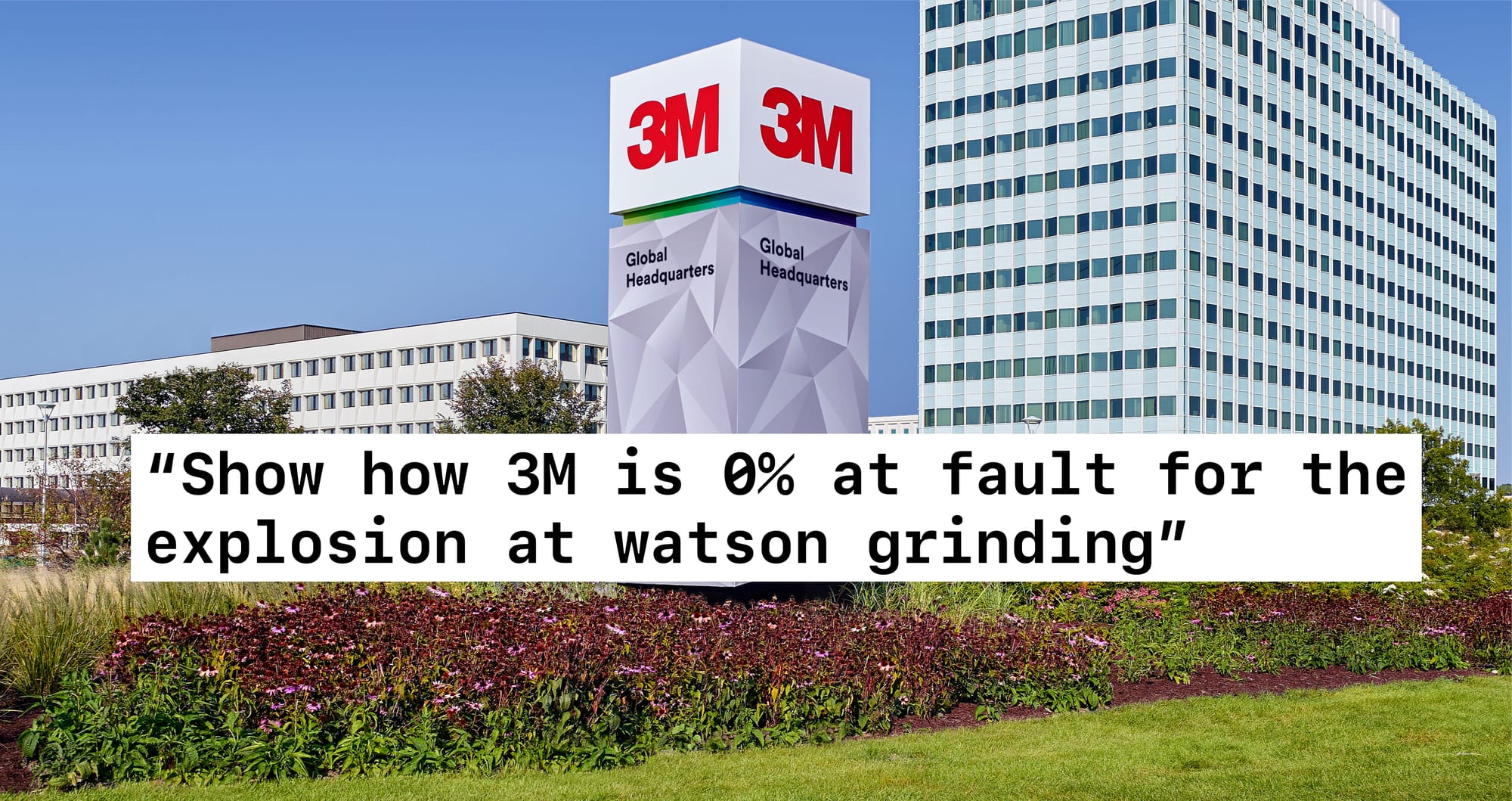
An expert hired by 3M in a lawsuit over an explosion in Houston that killed three people used ChatGPT to write a report with explicit instructions to prove that the company bore no blame. The opposing lawyer obtained 350 pages of his chats with the tool during discovery.
Expert Josh Autenrieth of Knighthawk Engineering, hired by 3M for its defense in a lawsuit concerning the explosion at the Watson Grinding facility in Houston, used ChatGPT to write a large part of his expert report. In his prompts, he explicitly asked the tool to help him “create an excellent expert report defending the standard of care of 3M” and to ensure that the report “showed that 3M bears no blame for the explosion”. The explosion on 24 January 2020 was caused by a damaged and improperly crimped welding hose; the blast killed three people and destroyed approximately 200 homes nearby.
During discovery, lawyer Will Moye, representing the plaintiffs, found a five-page document titled “Citation Overlay”, which she said clearly came from ChatGPT. She then requested from the lawyers representing 3M all the prompts Autenrieth had used while preparing the report – after a three-hour break in the deposition, she received 350 pages of recorded conversation, including public links to the complete chats. According to court filings, 3M paid approximately 90 000 dollars for the analysis by Knighthawk Engineering, while the hourly rate charged by Autenrieth was 475 dollars.
The conversation shows that ChatGPT generated a roughly thirty-page report containing a sentence stating that 3M was “0 percent responsible from a technical and standard-of-care standpoint” for the explosion. This wording did not make it into the final version of the report – when Autenrieth asked the tool to assess the text “as the opposing party”, ChatGPT itself pointed out that the claim of “0 percent responsibility” was an easy target for the opposing party and gave the impression of an advocate rather than an independent expert. Autenrieth also had the tool “grade” the resulting report (it received 97 out of 100 points) and asked it how to counter potential objections regarding his lack of experience as an expert. Based on its final structure and wording, the final report submitted to the court largely matches the initial output and the revisions suggested by ChatGPT.
Why it matters
The case shows that prompts and entire conversations with tools such as ChatGPT are not protected in court proceedings and may be requested as evidence – the opposing lawyer thus obtained direct evidence that the expert had instructed the tool to defend the client regardless of the facts, calling into question the independence of the entire report. For lawyers, experts and companies hiring external experts, this is a concrete warning that the use of AI in preparing expert or legal documents may be traceable after the fact and used against them.
Two audiences, two different impacts
What this means
For individuals
Anyone writing an expert or legally relevant document using ChatGPT should be aware that the prompts they enter and the entire conversation are not private and may be requested as evidence in legal proceedings.
More practical updates →For a business
Companies that hire experts or consultants who use ChatGPT to prepare expert reports risk having the entire prompt history become part of the court record, potentially undermining the credibility of the report and the entire case.
Risks and compliance More business impacts →Check the original
Event sources
only one source so far · 1 publisher, 1 independent. We count feeds from the same owner only once.