

Art project unveiled clothing that fools person detection in YOLO algorithms
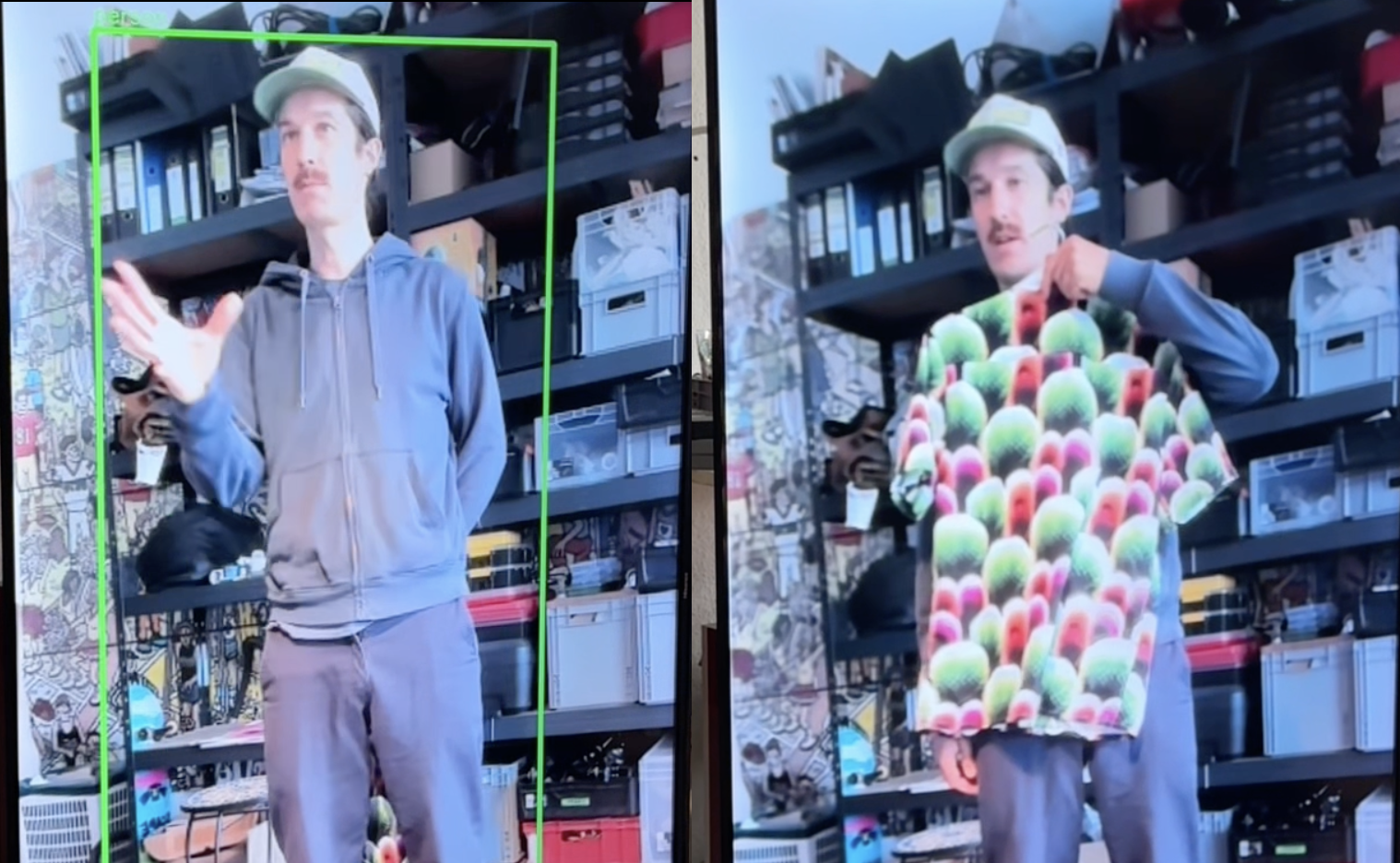
Artist Simon Weckert designed a shirt with a “digital camouflage” pattern that suppresses person recognition by cameras using YOLO detection algorithms, in response to the deployment of AI surveillance cameras by Berlin police.
Artist Simon Weckert created a shirt called “digital camouflage”: a pattern of blurred green and pink patches that prevents cameras using detection algorithms in the YOLO (You Only Look Once) family from recognizing a person. A journalist from 404 Media described a live test: a camera connected to a screen normally marks people standing nearby with a green box labeled “PERSON”, but as soon as the test subject holds the shirt in front of their body, the label disappears.
Weckert designed the pattern through iterative testing: he ran YOLO on his own camera, had it evaluate its confidence that it was seeing a person, and used a method called gradient ascent to gradually adjust the shapes, colors and rotations of the pattern until the “person” classification disappeared. According to Weckert, the project is a response to the deployment of AI cameras by Berlin police at the Kotbusser Tor metro station—the first police-operated cameras with object recognition in the city. According to the article, these cameras can also detect so-called anomalous behavior, such as lying on the ground, loitering or fighting, which may lead to police intervention; Weckert points out that this may also affect the detection of homeless people.
Weckert admits that he does not know exactly which specific algorithm Berlin police use in their cameras, so he cannot claim that his shirt works directly against the system deployed at Kotbusser Tor. All that has been verified is that the pattern works against publicly available algorithms in the YOLO family. The creator plans to update the pattern with each new version of YOLO, much like seasonal collections in fashion. According to the article, the project is intended both as a practical tool against surveillance and as an educational demonstration that ways to resist surveillance exist.
The source mentions that similar projects—face camouflage against facial recognition, clothing with nonsensical license plates against license plate readers—have been around for some time, and that many of them stop working as AI systems improve. At present, however, digital camouflage works against YOLO algorithms, according to its creator.
Why it matters
This demonstrates a concrete method that, according to its creator, works by using physical clothing to fool one of the most widely used open source algorithms for object detection. This matters both to individuals seeking privacy protection and as evidence of an adversarial vulnerability in the systems underpinning security cameras deployed in practice.
Two audiences, two different impacts
What this means
For individuals
Individuals who want to limit automatic surveillance by AI cameras gain a concrete tool that works according to its creator: clothing with a pattern that suppresses the “person” classification in YOLO algorithms, although its effectiveness against specific deployed systems is uncertain because operators do not disclose the type of algorithm.
For a business
For companies operating or supplying camera systems with object detection based on algorithms in the YOLO family, this is a documented example of an easily reproducible adversarial weakness: a visible pattern worn openly on clothing can reliably suppress person detection, posing a risk to the reliability of security and surveillance applications built on…
Risks and complianceCheck the original
Event sources
only one source so far · 1 publisher, 1 independent. We count feeds from the same owner only once.