

Analysis: authors argue that AI will not wipe out management consulting
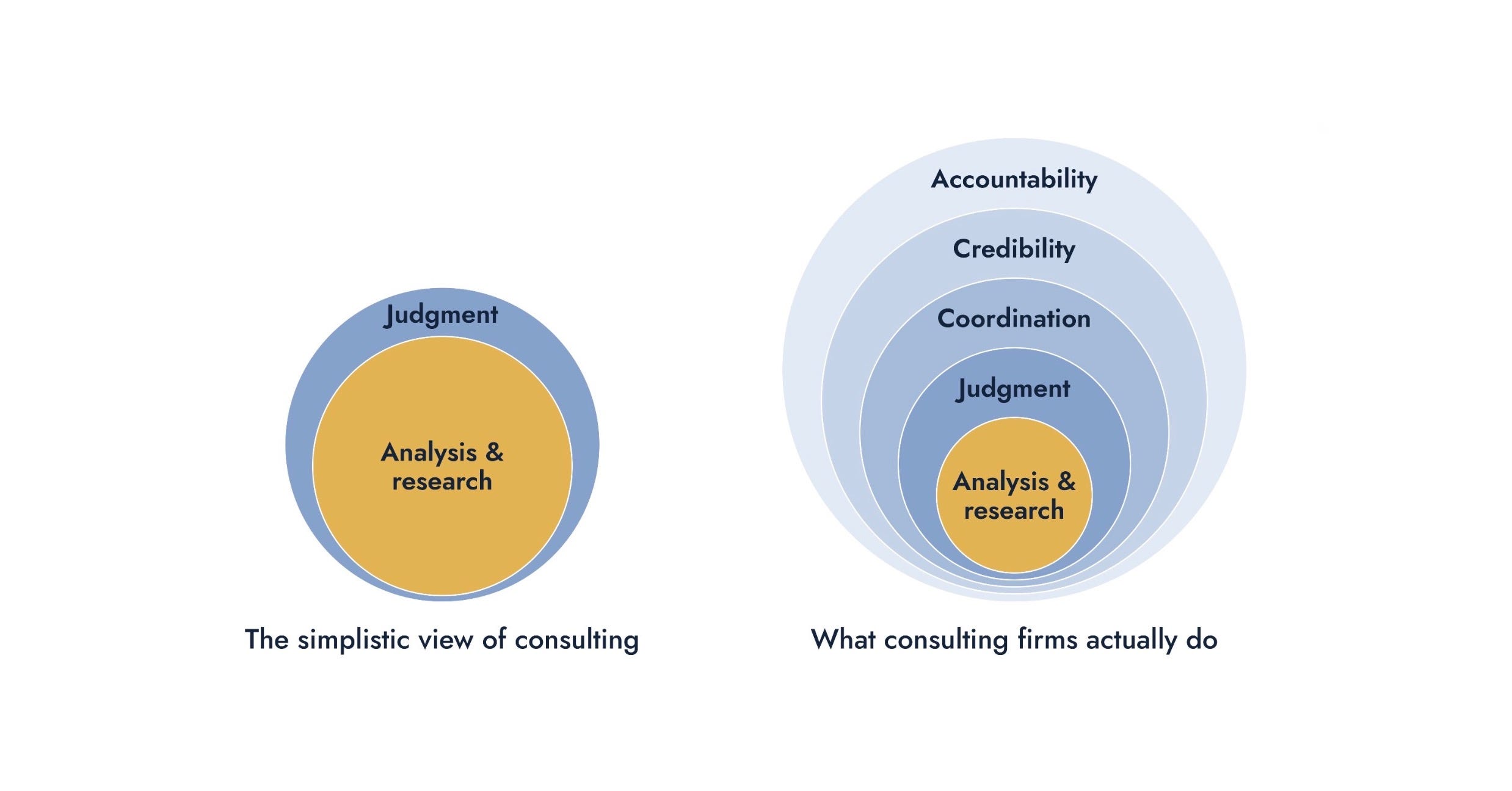
Rod Moshtagi and Sayash Kapoor, in their analysis, reject predictions about the demise of management consulting due to AI. According to them, AI only handles the analytical part of the work, while judgment, coordination, credibility, and accountability remain the domain of humans, and the authors argue AI is even creating new demand for consulting.
Rod Moshtagi (Harvard Kennedy School, formerly a senior associate at PwC) and Sayash Kapoor have published an analysis in which they reject apocalyptic predictions about the demise of management consulting due to AI. They argue that consulting derives its value from five sources: analysis, judgment, coordination, credibility, and accountability. According to them, AI already handles analytical work well (reports, financial models, presentations), but training AI on judgment – that is, deciding which questions to ask and interpreting evidence – has proven far harder.
The authors respond to specific recent predictions: The Free Press warned in 2025 that "consulting's reckoning is coming," an analyst for Axios claimed that consulting firms "will run out of work," and the CEO of AI startup Mercor predicted in February 2026 that within two years there would be chatbots on par with the best consulting firms. According to the authors, these predictions misunderstand what clients are actually paying consulting firms for – even if AI were to master judgment too, companies would still need someone to reconcile managers' competing interests, lend credibility to recommendations before leadership, and bear accountability if things go wrong.
The authors further argue that general-purpose technologies such as enterprise computing or the internet did not merely make existing work cheaper in the past, but changed clients' needs and created new demand for external experts. According to early evidence cited in the analysis, AI is working similarly – AI-related organizational transformation and companies' heightened interest in cyber defense (owing to AI's improved capabilities in this area) are, according to the authors, increasing demand for consulting firms.
At the same time, the authors note that today's consulting firms are not automatically safe – clients' internal teams will also compete for this new demand, and AI companies are building their own business deployments, even as they simultaneously form partnerships with consulting firms. According to the authors, consulting firms must adapt by changing their operating model: building know-how that clients lack, developing in-house AI expertise, collaborating with AI companies on deployment, and remaining neutral toward individual model providers.
Why it matters
The analysis offers a framework for distinguishing which part of consulting work AI is already able to replace (analysis) and which remains dependent on humans (judgment, coordination, credibility, accountability). This is relevant for assessing how quickly and in which direction the market for professional services will transform, and whether deploying AI in business processes is more of a threat or a source of new demand for consulting.
Two audiences, two different impacts
What this means
For individuals
For people working in consulting or similar knowledge work, the text suggests that value based purely on information processing is most at risk, while skills such as judgment, building trust, and the ability to take accountability for outcomes remain hard to replace.
For a business
For companies deploying AI, the text suggests that AI-related organizational transformation and strengthened cyber defense, according to the authors, increase rather than decrease demand for external consulting – but at the same time, consulting firms must adjust their operating model to retain this demand against clients' internal teams and against AI companies themselves.
StrategyCheck the original
Event sources
only one source so far · 1 publisher, 0 independent. We count feeds from the same owner only once.