

MIT Professor Turkle's book warns of the impact of chatbots on interpersonal relationships
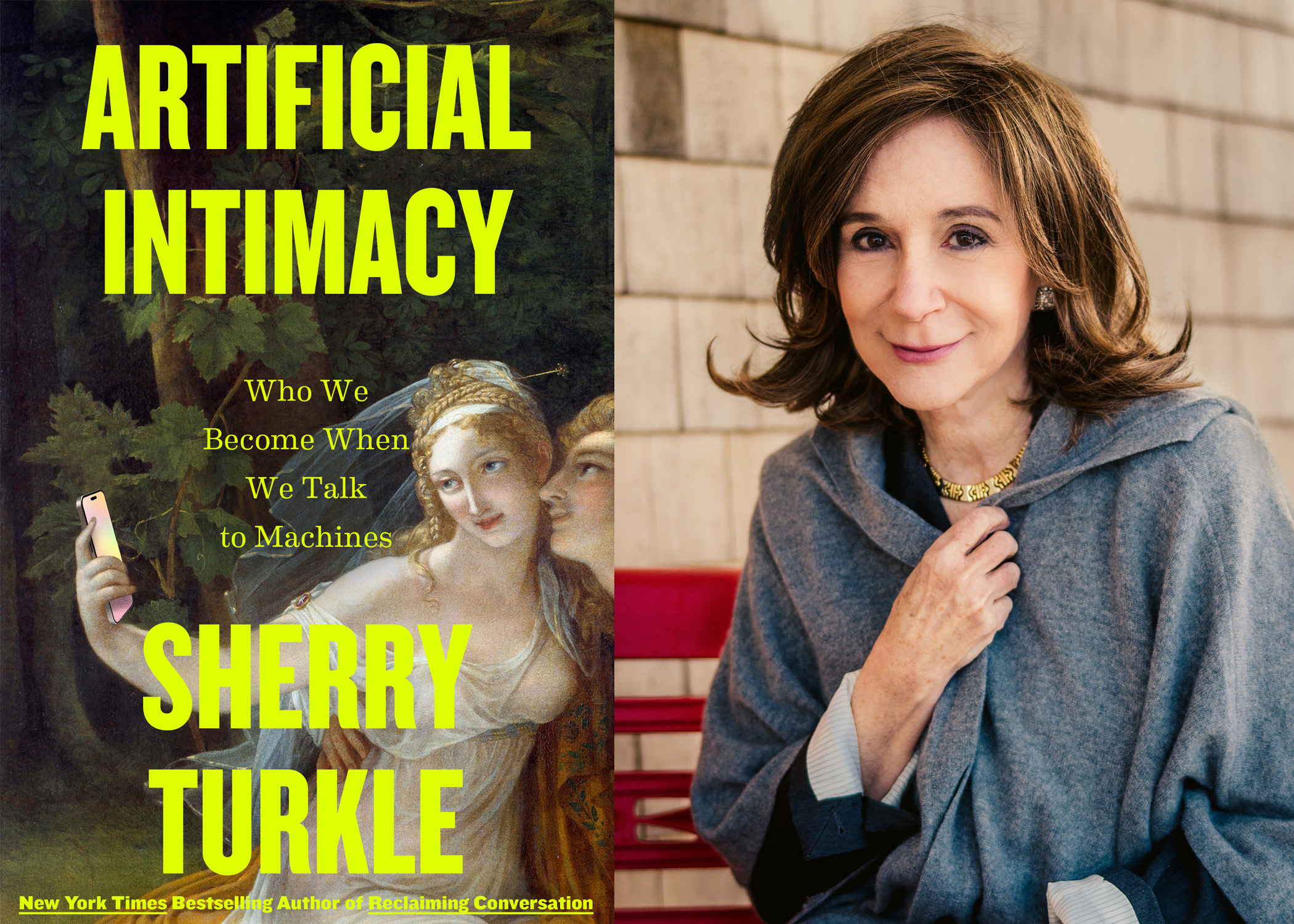
Professor Sherry Turkle of MIT has published a book titled "Artificial Intimacy", in which, based on research, she argues that frequent use of chatbots weakens the ability to build real interpersonal relationships across all age groups.
Professor Sherry Turkle of MIT has published a book titled "Artificial Intimacy: Who We Become When We Talk to Machines" (publisher Little, Brown and Company), which, based on interviews and research, examines the psychological and social impacts of using chatbots. Turkle, a sociologist and clinical psychologist who has long worked in MIT's program on science, technology, and society, builds on her earlier books about the relationship between technology and human identity ("Alone Together", "Reclaiming Conversation").
According to Turkle, chatbots only offer pretended empathy — it is a program predicting the most probable next piece of text based on data, without any real understanding of or care for the user. In her book, she documents cases from various stages of life: in children, she describes the blurring of the boundary between chatbots, people, and devices (an eight-year-old considers the phone through which they talk to grandparents as well as to ChatGPT to be the same category of "things you can reach through a phone"), while in adults she describes dependence on chatbots during breakups, seeking advice about studies, or creating chatbot avatars of deceased relatives.
Turkle argues that frequent use of chatbots leads to a "deskilling" in interpersonal relationships as well as at work, and that people are beginning to confuse machine empathy with real empathy, which diverts them away from real people. She also mentions that chatbots have been linked to highly publicized cases of teenage suicides following intensive dialogues with these tools.
The source article is incomplete, missing its final part — for details, see the source article.
Why it matters
The book provides a documented research perspective on how intensive use of chatbots for emotional topics can affect people's ability to build and maintain real relationships, including children, where, according to the author, it involves blurring the distinction between people and devices. For individuals, it is a prompt to reflect on their own use of chatbots in sensitive life situations; no direct business impact follows from the sources.
Relevant practical impact
What this means
For individuals
The book points out that relying on chatbots to deal with emotional and relationship issues can weaken the ability to build and maintain real human relationships, across age groups from children to adults.
Check the original
Event sources
only one source so far · 1 publisher, 1 independent. We count feeds from the same owner only once.