

Anthropic pushes for mandatory AI system safety audits in the US
Anthropic supports federal and state legislation requiring independent safety audits of AI systems, including the Massachusetts bill with a $561 million package. President Trump, by contrast, is betting on industry self-governance without strict regulation.
Anthropic's leadership has in recent days actively engaged in discussions on AI regulation in the US. CEO Dario Amodei met with President Trump, House Speaker Mike Johnson, and the heads of other AI companies (Nvidia, OpenAI, SpaceX), first at a private dinner and then at a lunch at the White House. According to sources, Trump said after the meeting that he had signed a "morally binding" agreement on AI, and emphasized a self-governance approach for the industry instead of strict government regulation, citing among other things the competition with China.
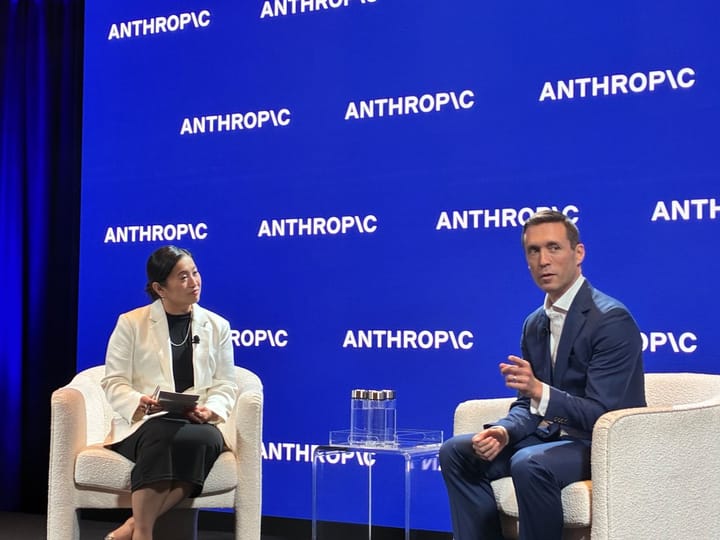
At the same time, Brian Peters, Anthropic's head of government relations for North America, spoke at an event hosted by Axios, where he reiterated the company's position: if an AI company claims its technology is safe, an independent evaluator must verify this, and the government should have the authority to intervene. According to the company, Anthropic has voluntarily committed to independent audits of its work and calls on competitors to do the same.
Among the legislation that Anthropic supports is the Massachusetts economic development bond bill, funded with $561 million, which includes requirements for AI system safety guarantees. Similarly to proposals in California and New York, it would require AI companies to disclose internal safety frameworks aimed at reducing catastrophic risks and to undergo mandatory independent third-party safety audits. Massachusetts State Senator Barry Finegold defended the bill as a measure protecting against catastrophic risk.
According to a source, competitor OpenAI is pushing a different vision of regulation that leaves more room for open-source AI within the context of national security. Concerns have been raised that stricter oversight could limit open models and cheaper Chinese competitors (Alibaba, DeepSeek, Moonshot AI). Finegold, however, argues that these companies, too, would have to comply with US regulations if they want to do business in the US market.
Why it matters
If the proposed legislation in Massachusetts, California, or New York passes, AI vendors will have to disclose safety frameworks and undergo independent third-party audits — increasing transparency, but also the regulatory burden for companies developing or deploying AI systems. The federal stance remains unclear, as Trump favors industry self-governance over strict regulation, meaning companies must track divergent developments at both the state and federal level.
Relevant practical impact
What this means
For a business
The proposed legislation (e.g., the Massachusetts bond bill) would introduce an obligation to disclose safety frameworks and undergo independent third-party audits for companies developing or deploying AI systems, which would increase compliance costs and risk-documentation requirements.
Risks and complianceCheck the original
Event sources
only one source so far · 1 publisher, 1 independent. We count feeds from the same owner only once.